
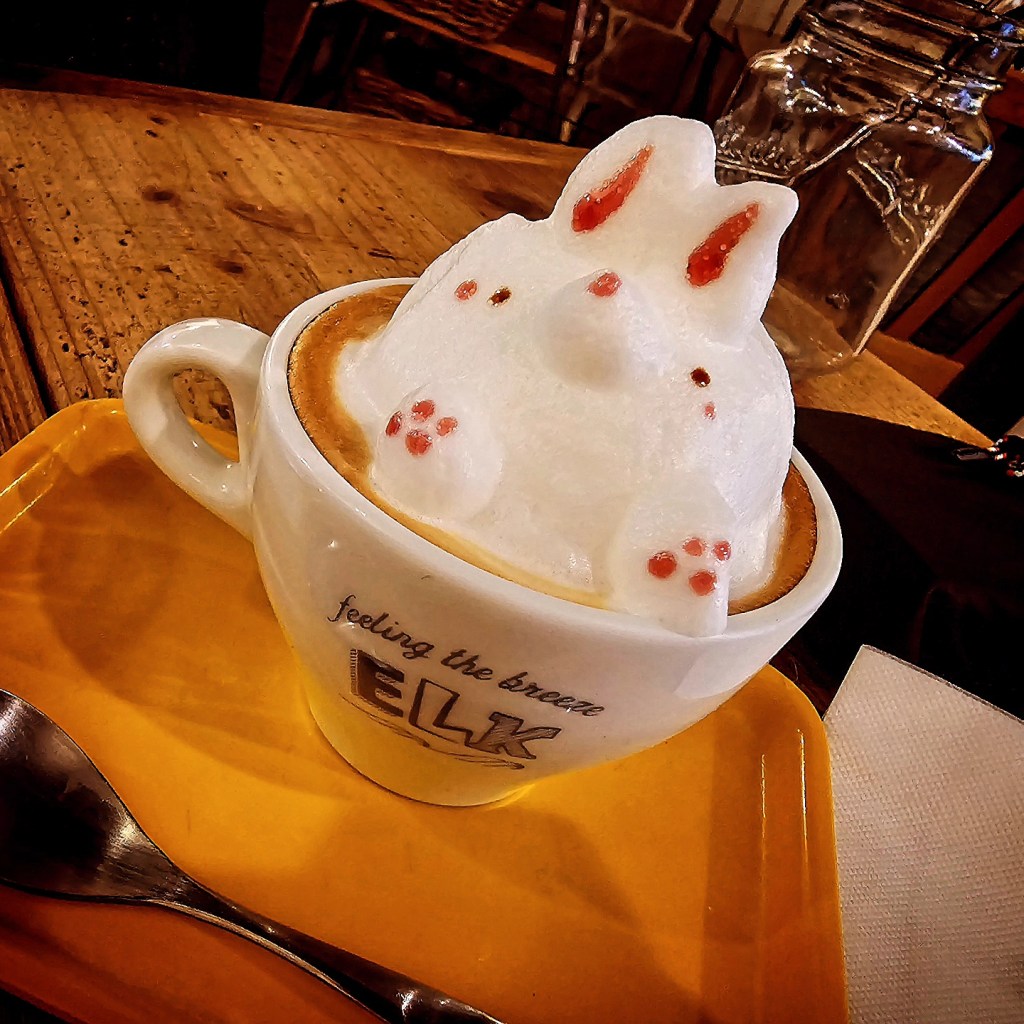
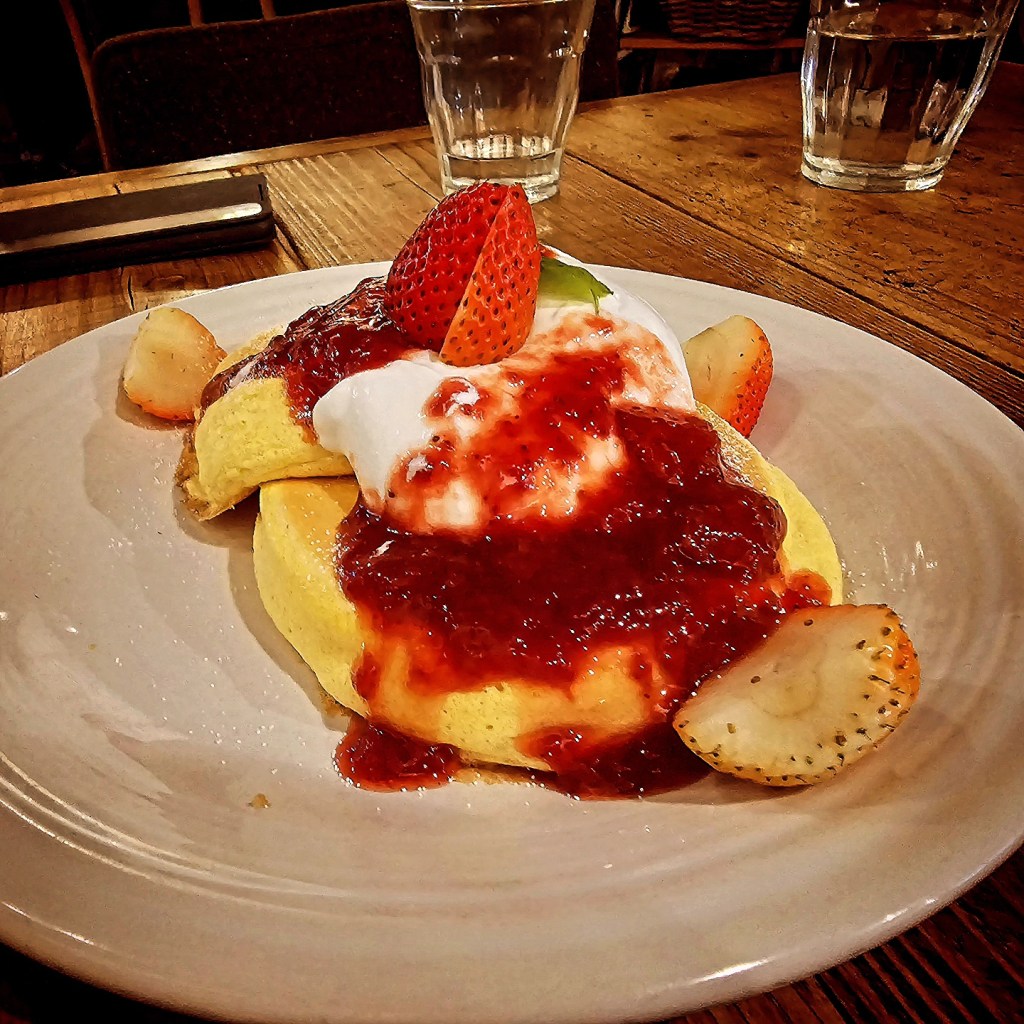
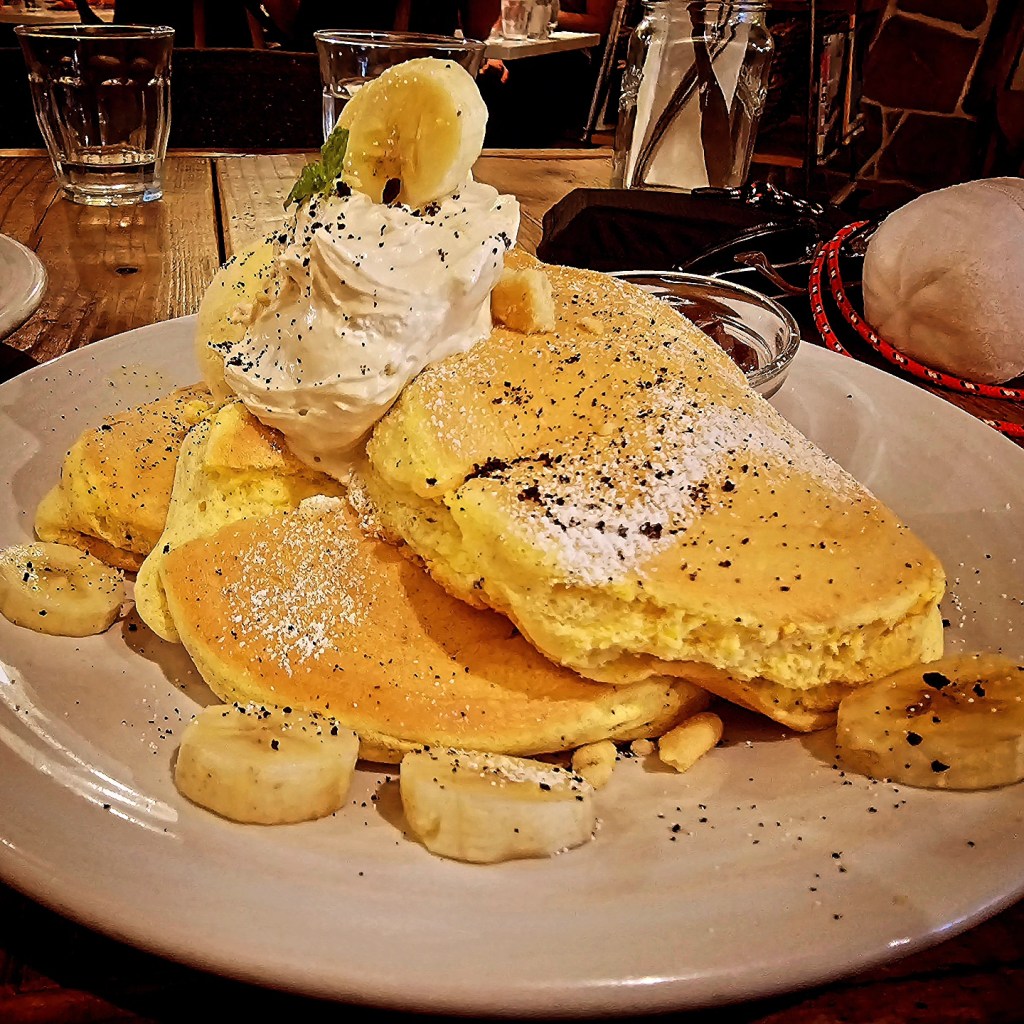
We didn’t exactly have a balanced diet on our first day in Osaka. The city, popularly recognised as one of the ‘foodie’ centres of Japan, is chilled and full of edible opportunity. We arrived early and were able to check in early to our hotel, The Bridge (so called for a bridge that spanned a parking space outside its front door). Ravenous, after a substandard breakfast in our Kyoto hotel earlier, we found a café next door that specialised in fluffy pancakes, à la Instagram. The café, Elk, dressed up its coffees with 3D latte art, reeked of hipster, and was full of foreigners (like us, yes). Chronically short-staffed, it served up some kick-ass pancakes forty-five minutes after ordering that were an inch tall at least. Mine were heaped with chocolate and banana, and The European’s were slathered in strawberries and cream. We ate them greedily, honouring their awesomeness in silence.
Later that day, twenty thousand steps later, we were searching for dinner, in Osaka’s famous Dōtonbori neighbourhood . This area is sensory overload, neon streets stretching out in all directions from Glico Man and the bridges over the area’s canal, home to party barges thumping out house music. As we wandered, we passed Kani Dōraku and its massive animatronic spider crab, compelling us to order seafood. But no, we were on the hunt for okonomiyaki, grilled pancakes mixed with cabbage, and various meats and vegetables.
We found our goal, a place called Mizuno, a renowned okonomiyaki restaurant was established in 1945, a couple of hundred metres down the road from Crabzilla. We queued for twenty minutes and were seated upstairs at a table with a built-in grill. We had already ordered a set menu for 3,300 Yen, a showcase of Mizuno’s three bestsellers; Yam Yaki, with pork and scallops, Mitsuno Yaki, with our choice of six ingredients (we chose a mix of chicken and various veggies), and Negi Yaki, with pork and kimchi. These are all mixed together at the table on the grill, the chef-slash-server liberally drizzling the barbeque-soy glaze and mayonnaise over the finished okonomiyaki. The Negi Yaki was served runny and handed over to us; it was great fun to grab the metal spatulas and flip it around until it was ready to eat. Crunchy and packed with umami and multitude of flavours, we enjoyed them all; in fact, it was a surprisingly substantial and complex meal.
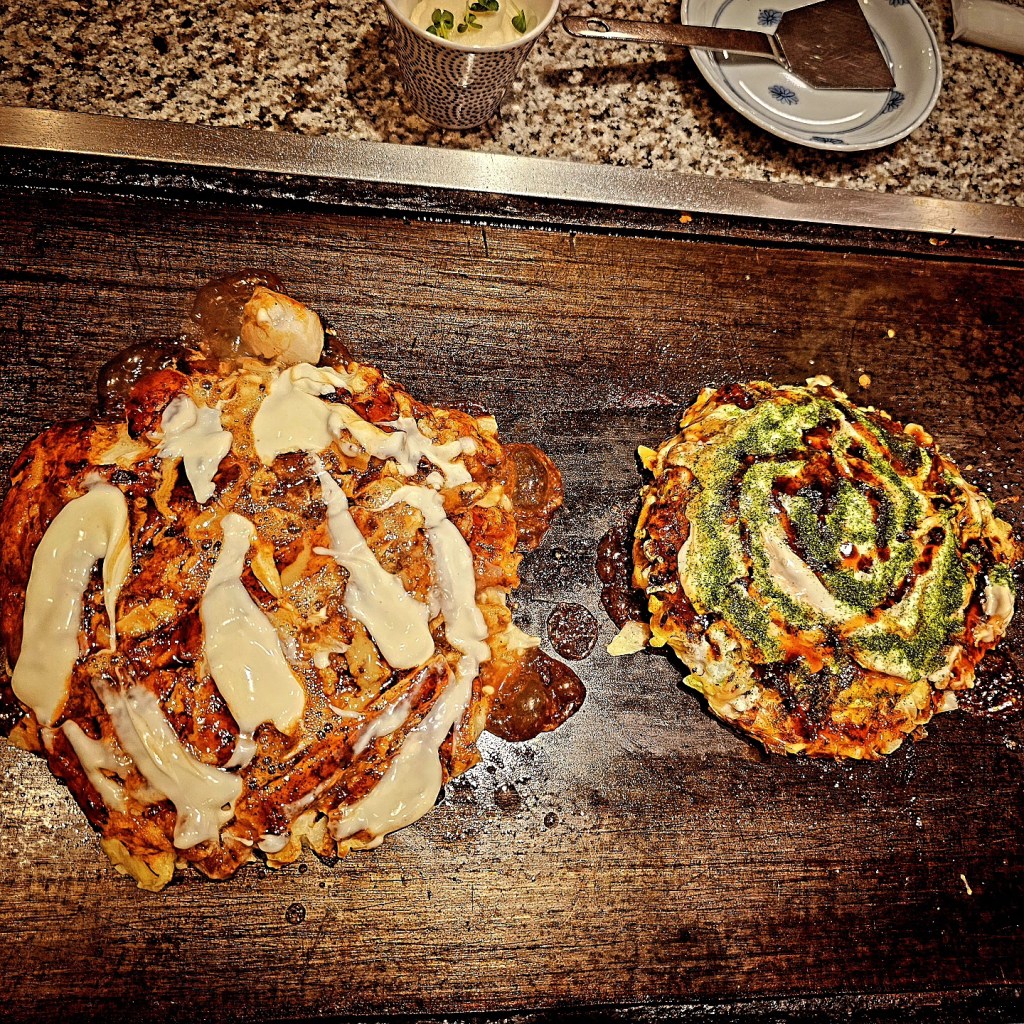
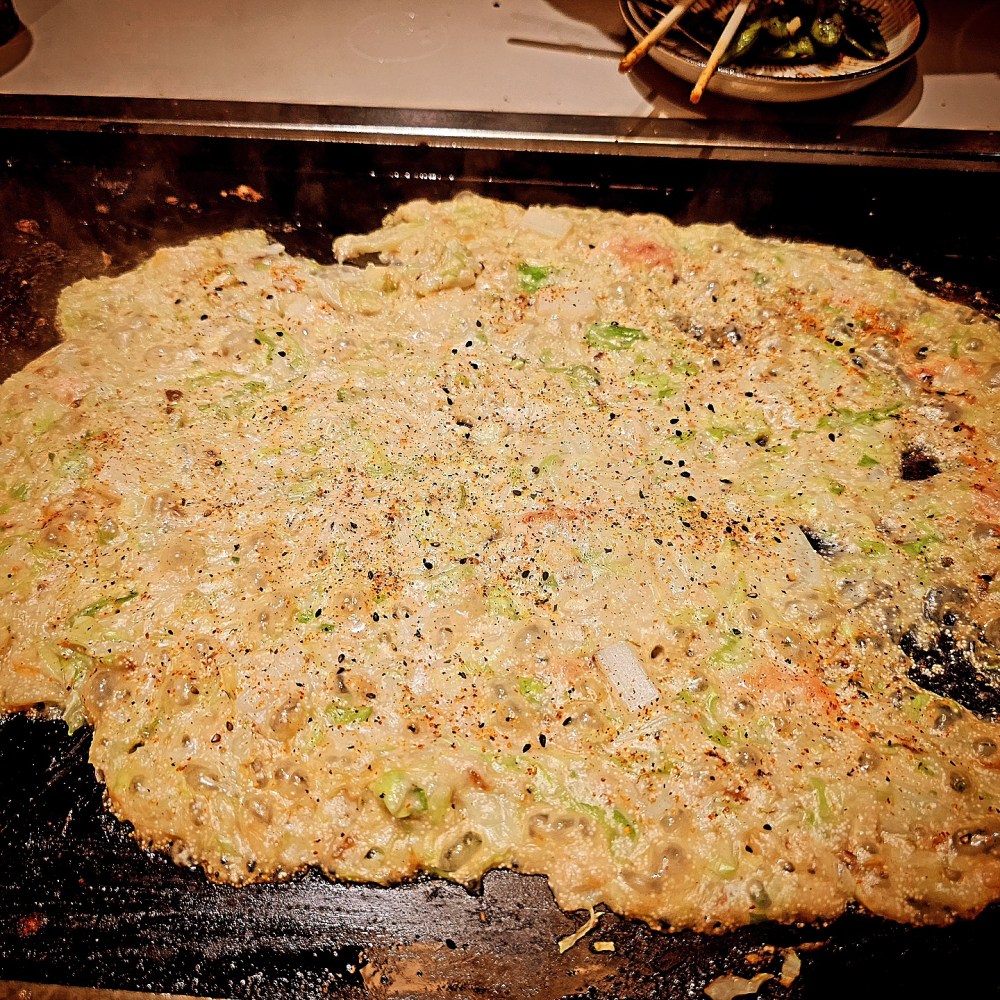
We left the restaurant replete and very happy, albeit stinking of grill grease, just like my days working in T.G.I. Fridays. A few days later, on our last night in Japan, in Asakusa, we tried monjayaki, a different type of pancake, the batter thickened with finely chopped or puréed ingredients like roe and again, cooked by yours truly. It’s very chewy – dare I say cheesy in texture – with the amalgamated ingredients creating a huge amount of taste. I have never had anything like it before, but enjoyed every last bite; it was a fitting end to the holiday.

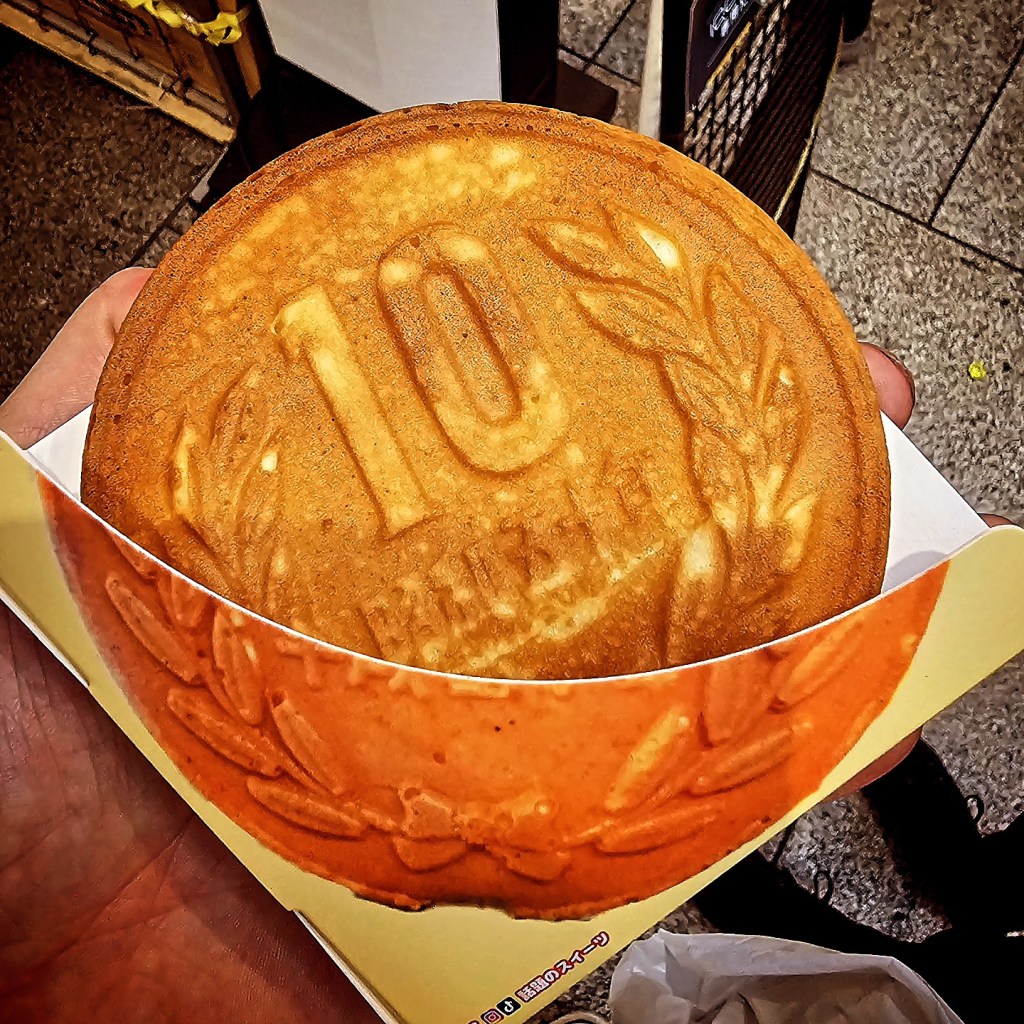
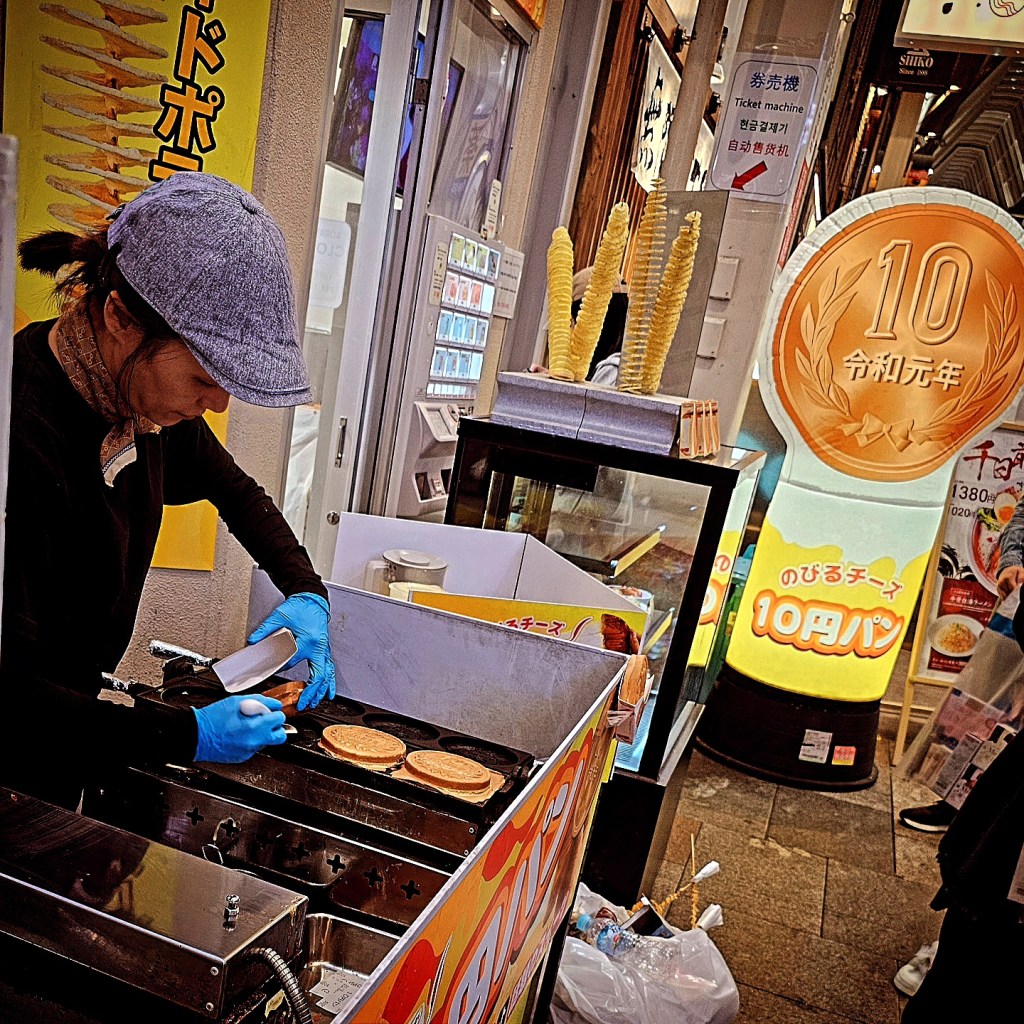
Back to Dōtonbori, after we left Mizuno. We searched for the fabled sweet pancake shaped like a ten-Yen coin and stuffed with cheap mozzarella. Another Insta-famous dish (apparently most food in Japan is), so being the unimaginative kids at heart that we are, we had to try it. It was late, and the food truck where we found them was closing, but we got the last couple that had been freshly prepared, the sugary batter being poured into the moulds, rotated over fire and pumped full of cheese. Tastier than expected, the batter was crunchy on the outside and soft on the inside, with a distinctly – but not overbearingly – sweet taste. The stringy mozzarella oozed out and hung from our mouths as we ate them. I could have had a load more Yencakes that evening, but with three courses of pancakes in one day behind us and a tummy crying for help, we decided to retire for the evening, via the Gashapon machines of course.


 The food thing.
Leave a reply to Two Weeks of Eating in Japan, Chapter 12. Cancel reply