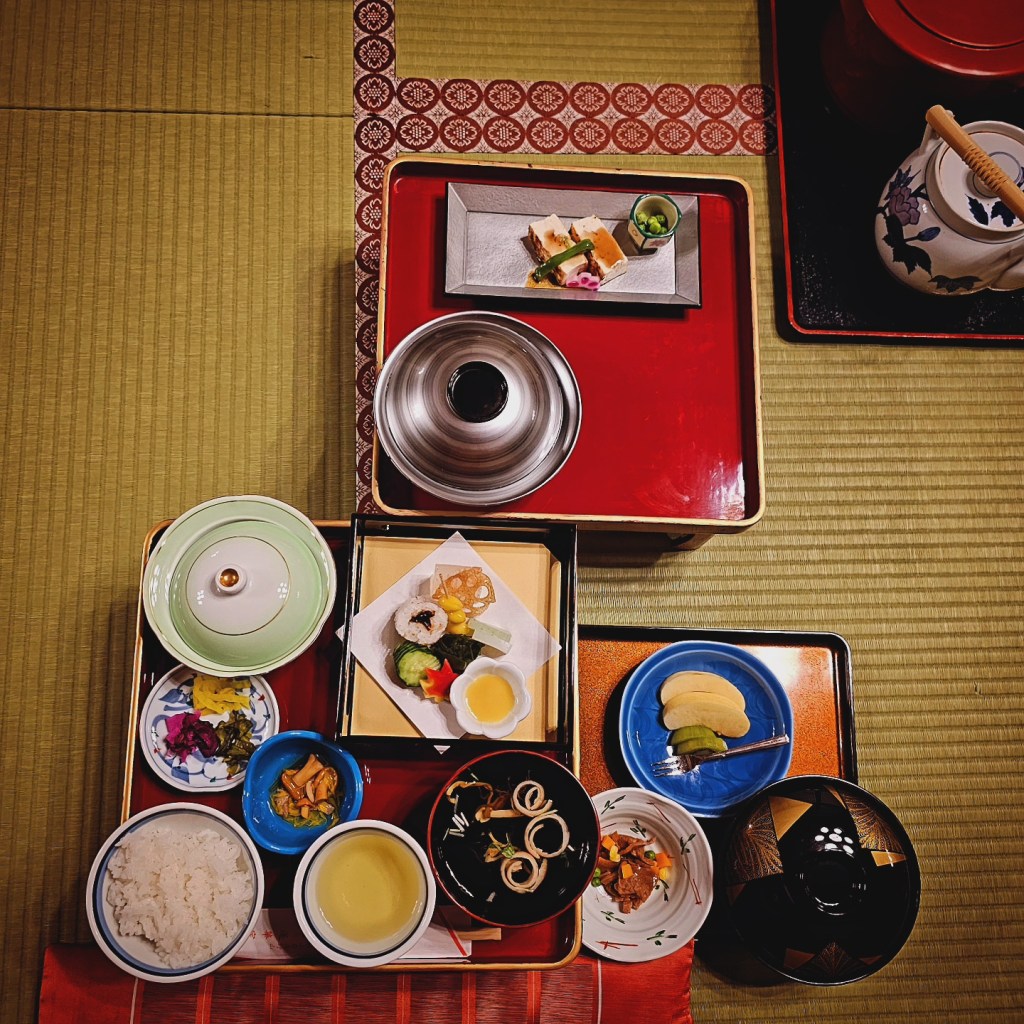
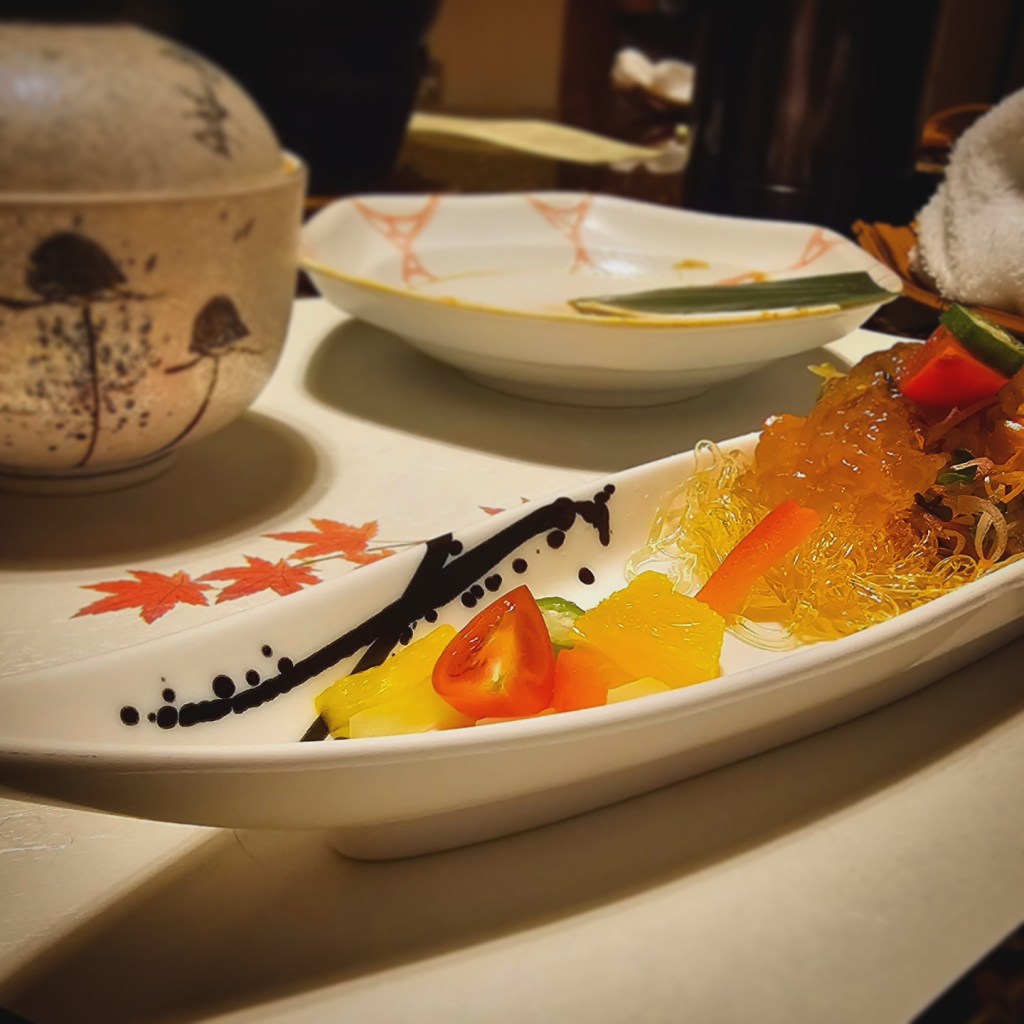
A kaiseki experience was one of the things I was most looking forward to trying in Japan, but they were also meals that I had the most difficulty accepting and enjoying. Kaiseki (definition?) is traditional Japanese multi-course menu of loveliness that treats the diner to a variety of plates that go far beyond the Western idea of a tasting menu. Very often, these are reasonably arbitrary, chosen by the chef based on what’s fresh, optimal, and available, before being cooked and served in a specific sequence so that the diner gets the best experience. Often, you enjoy it with tea.
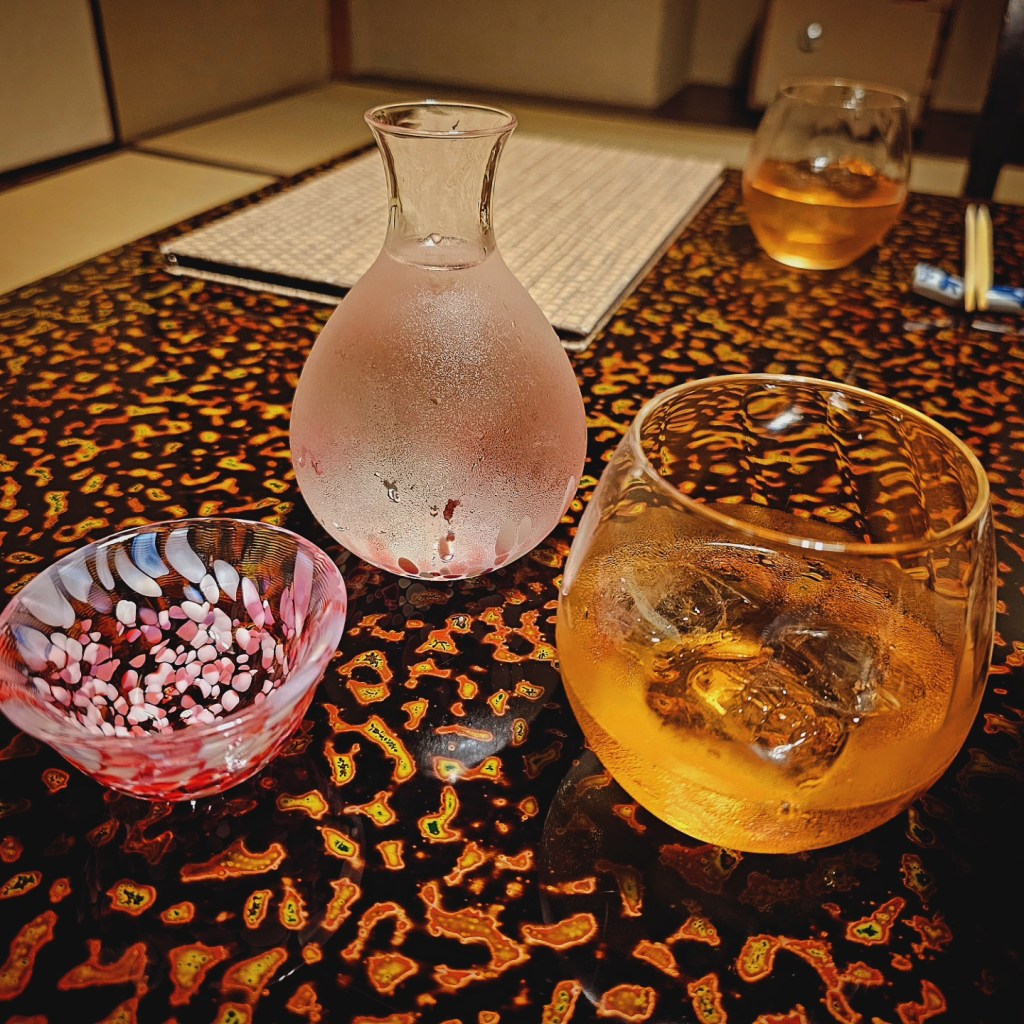
Not ones to have any kind of tasting menu with tea alone, we took our first kaiseki, in a traditional onsen spa hotel with sake as well. Sorry, and plum wine, as The European wanted me to try it. Aside from the tart but silky sake being the best I’ve ever tried – including at Hakkasan in London, where for the prices you pay, you expect nothing but the best – the plum wine was fabulous; wine with a distinctive taste of the fruit I love but seldom eat. I am not sure it was meant to go with any main course, let alone kaiseki, but it was great to try. The second kaiseki we tried, in temple lodgings, was obviously alcohol free. I don’t think monks have a sake cellar hiding behind the prayer room.
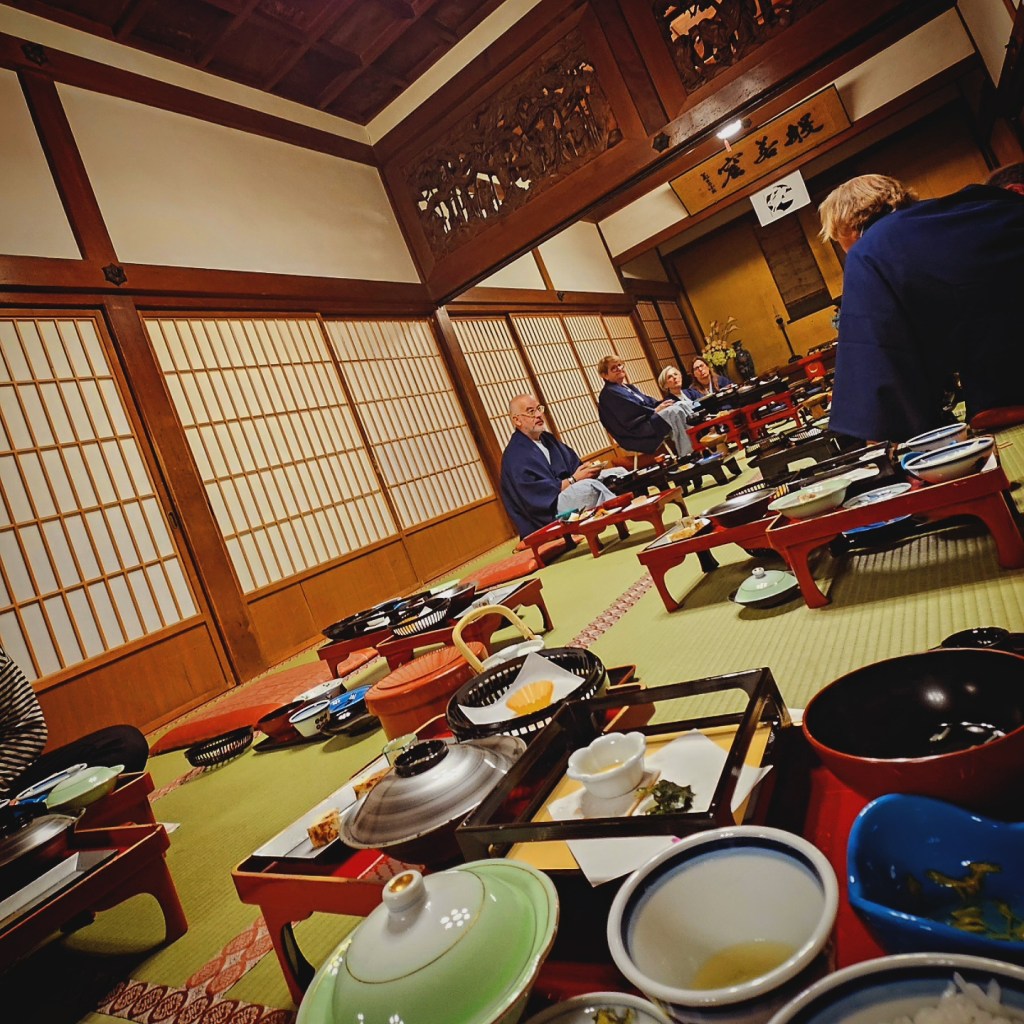
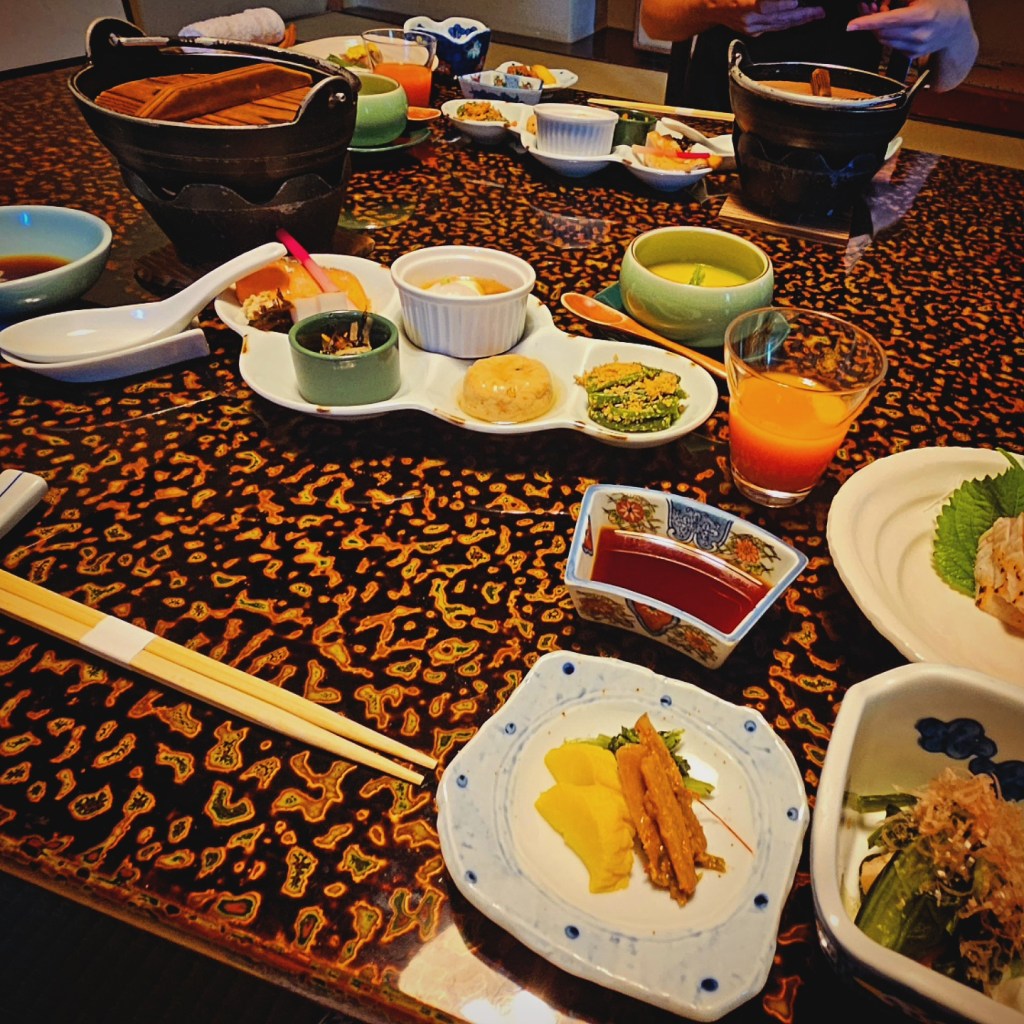
In the onsen hotel, kaiseki was served in our room, at the chabudai, the low tables commonly seen in traditional Japanese residences. It was expertly presented, each course being thoroughly explained by our charming water from Okinawa, who, as per tradition, never once turned his back on us, even as he went to leave the room after serving each course. In the temple, kaiseki was served all at once, in communal dining rooms, again, at chabudai.
Ahh, chabudai. Being way over six feet tall and with joints as supple as two-by-fours, I find eating from these low tables massively uncomfortable. For most of my kaiseki experiences, half my attention was focused on avoiding cramps while The European looked across the table at me, pissing herself laughing.
The other half of my attention was spent overcoming mental hurdles to various foods. Pickle courses are bombastic. Don’t get me wrong, I like pickles, but the Japanese love it. Every time I ate one, my mouth pursed up like a cat’s arsehole. There’s plenty of tofu as well. Tofu and I will bever be bedfellows. I find the texture just too alien; the sliminess and unnerving cold and wobbly texture physically making my mouth spasm in fear.
Many of the tofu dishes at the kaiseki meals were too much for me, but some, like a tofu pudding at the temple and a season, solid fried tofu at the onsen hotel, were really good. Obviously all the rice and miso soup we ate were incredible, as were sashimi dishes, noodle stews, grilled meats, and crispy fresh boiled vegetables.
There’s so much on offer at a kaiseki it’s impossible to list it out and like it or not, everything was prepared with so much care, love, and respect for the ingredients you couldn’t help but feel in awe of the whole experience and feel terrible for destroying such pretty presentation. Suffice to say that even I, who passed a fair amount of food to The European, who was in her element, and, like Mr. Bean with his steak tartare, hid particularly strong pickles under spare rice to make it look like I had eaten them, felt full to bursting at the end of the meal.
For me, kaiseki was an unforgettable experience and one that I was delighted and privileged to have tried not one, but twice (four times if you count the traditional breakfasts in both hotels). It’s something anyone visiting Japan should try, and a welcome break from standard noodle and rice dishes that form the bedrock of eating in this great country.

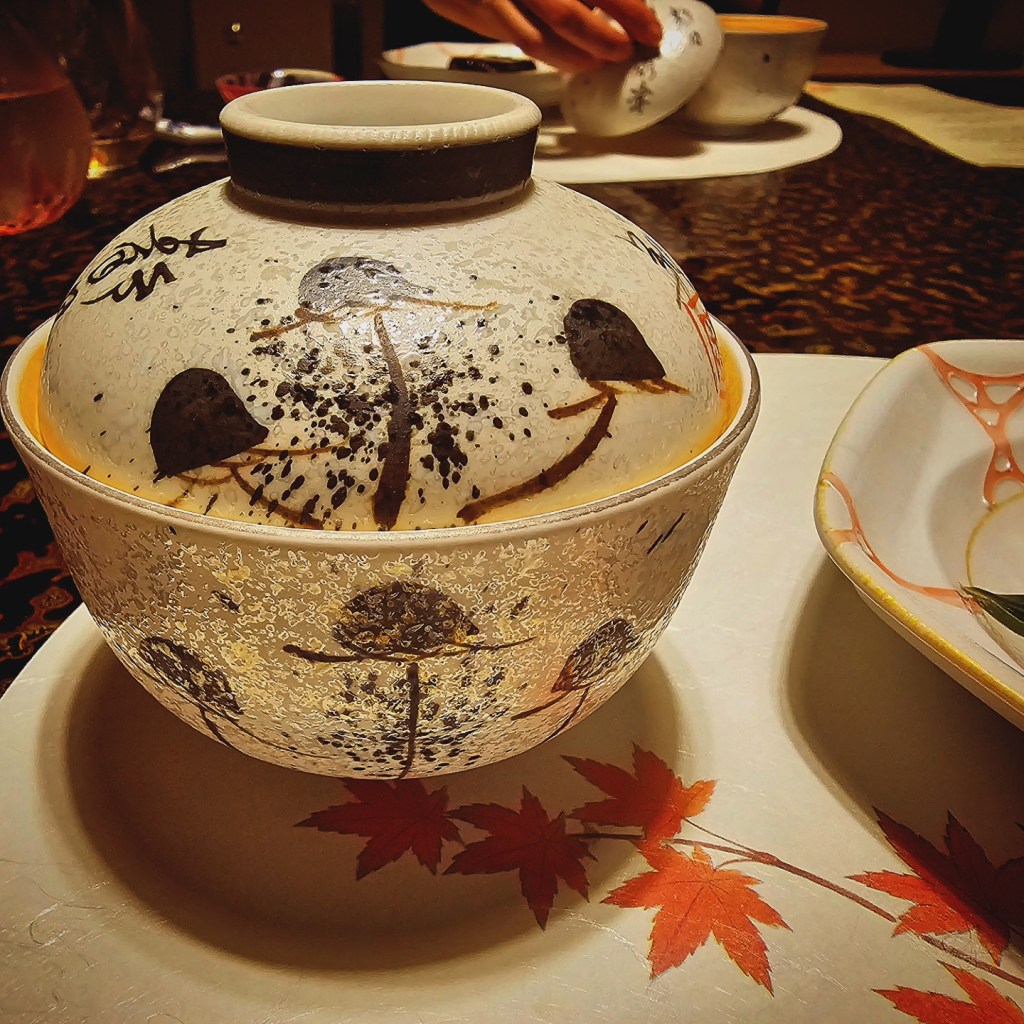
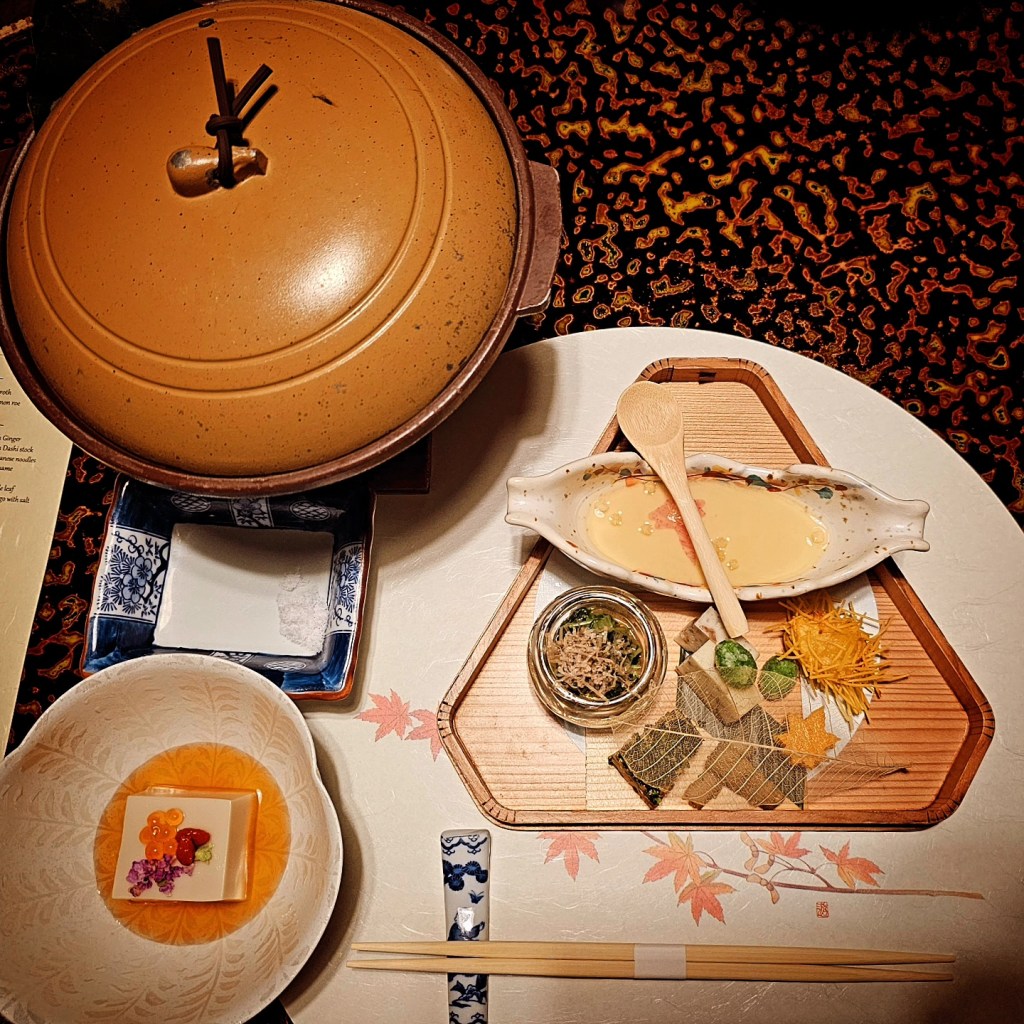
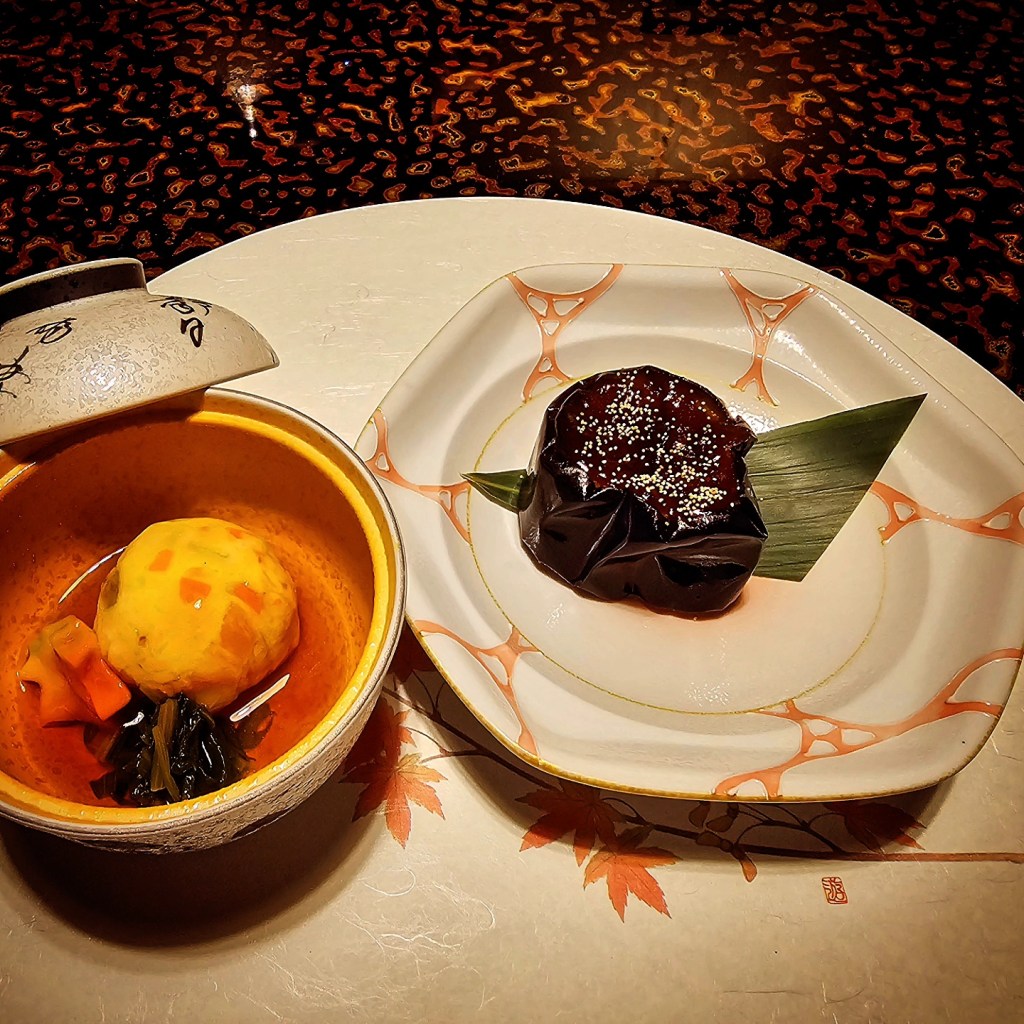


 The food thing.
Leave a reply to Two Weeks of Eating in Japan, Chapter 6. Cancel reply