As I have mentioned before, Ramen ain’t my thing. Well, at least it wasn’t until recently, as The European gradually made me eat more and more of it. She knows me too well, that a sudden or terrible change will not be responded to well, but drip-dropping new interventions onto my lap will largely be ignored until I realise too late and I am fine with whatever.
In Japan, I appreciated Ramen for what it’s appreciated for by Japanese. Above all else, it’s simple, basic sustenance, prepared at the speed of light in shoebox-sized counter restaurants known as ramen-ya. Paradoxically, ramen is also complex and nuanced, with every ramen-ya priding themselves on their special broth, cooked for hours by a chef employed for years, using a recipe perfected over generations, which has to be the best in town, as well as their own hand-made noodles (it’s said that a ramen-ya isn’t a ramen-ya unless they make the noodles themselves).
The dish is cheap as well. In Japan, the best bowl of Ramen you’ll ever eat in your damn life will rarely cost you more than ¥1,500, which, at the time of writing, is just over £eight. Here, in London, you’ll be hard pressed to find even an acceptable bowl for less than £fifteen, and I have never seen one under £ten.
In Japan, Ramen is often ordered like Tsukemen. You visit any number of pokey, rough restaurants, thumb ¥1,000 yen notes into a ticket machine, press the ‘ramen’ button, press for supplementary toppings as needed (we discovered that most standards bowls come without egg which is different to back home), and beers, though invariably we found ourselves to be the only ones drinking.
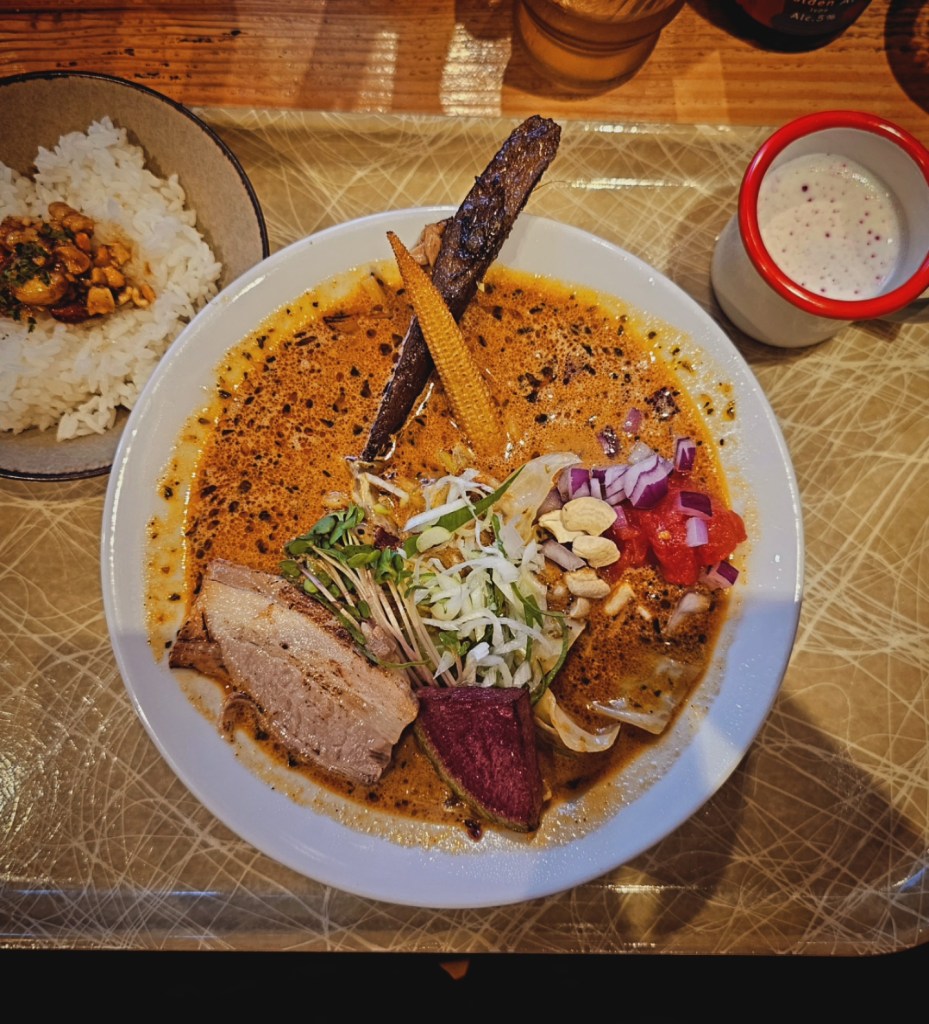
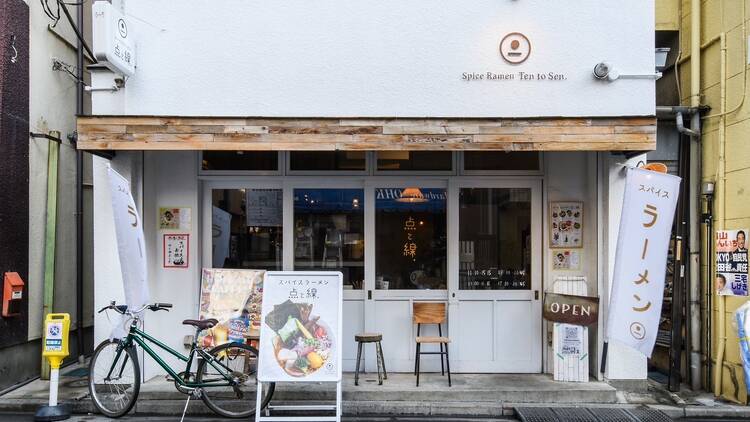
We had umpteen bowls of Ramen on our vacation, and none were less than incredible. One that stands out for me though was at Ten to Sen, an unassuming but highly rated ramen-ya in Shimokitazawa, a bohemian neighbourhood that exudes a Shoreditchy vibe. There, spicy ramen was served as a set meal, which is quite common in Japan, coming with a serving of rice, and a soothing yoghurt drink afterwards. The pork broth was complex and earthy. Whereas it packed a searing chilli heat, happily the punch didn’t last forever. Homemade noodles were perfectly cooked and tender disks of pork, floating on top like porcine lily pads, were juicy and tender, falling apart in my mouth.
Every bowl of ramen left me smiling, and full. Though I was warming to the dish before our trip to Japan, I came to truly love eating it while I was out there as I came to regard it as a welcome retreat from more challenging dishes and food which I was slowly getting accustomed to. After the substandard katsudon lunch in Ginza, I awaited the familiar and tasty hug of noodles and broth, come dinnertime. The kaiseki menus we enjoyed in the onsen hotel and monastery later in the vacation provided some of the most detailed, exciting, and creative meals of my life but were challenging for my untested British mouth.
After these meals, we would roll back into big cities on efficient trains. Unlike comfort food in the U.K., I would be not eagerly anticipating burgers (though these can be found in abundance in Japan), but a ramen-ya with a snaking queue that gives me comfort in its credibility, a couple of empty seats and bowls of the good stuff to set things right.



 The food thing.
Leave a reply to Worcesteramen. Cancel reply