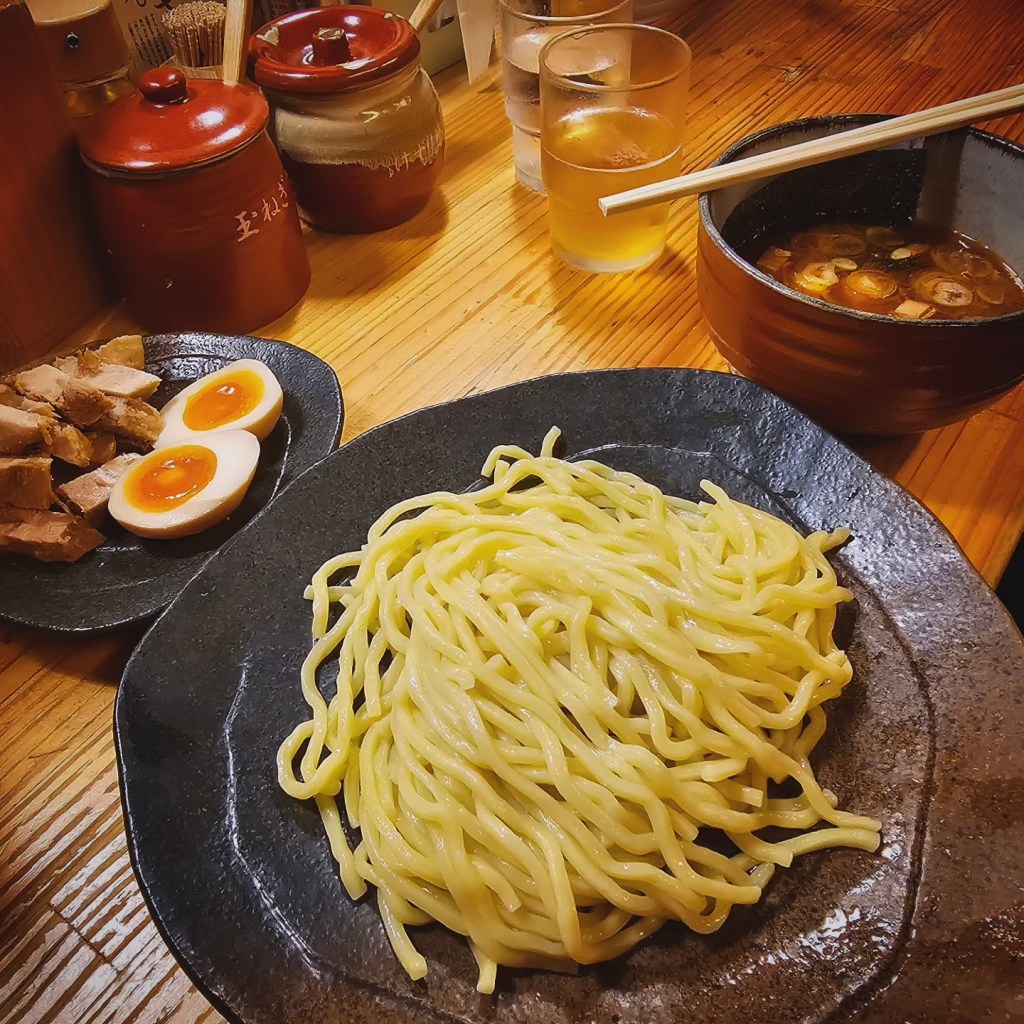
Tsukemen.
The first night of any holiday somewhere new and unknown is spent a little lost. We arrived, off the back of a seven-hour flight to Dubai and another ten-hour flight to Tokyo, famished. Having taken the slick and logical metro to our hotel in Akihabara, we dropped the bags and hit this hip and energetic neighbourhood.
If we fast-forward to the end of the vacation, we were considering Akihabara our ‘home’ in Japan. It doesn’t have the worldliness of Shinjuku or the glitz of Ginza, but its massive station and tightly packed streets of electronics stores, arcades, maid cafés and food stalls are a perfect microcosm of this city of thirty-five million people.
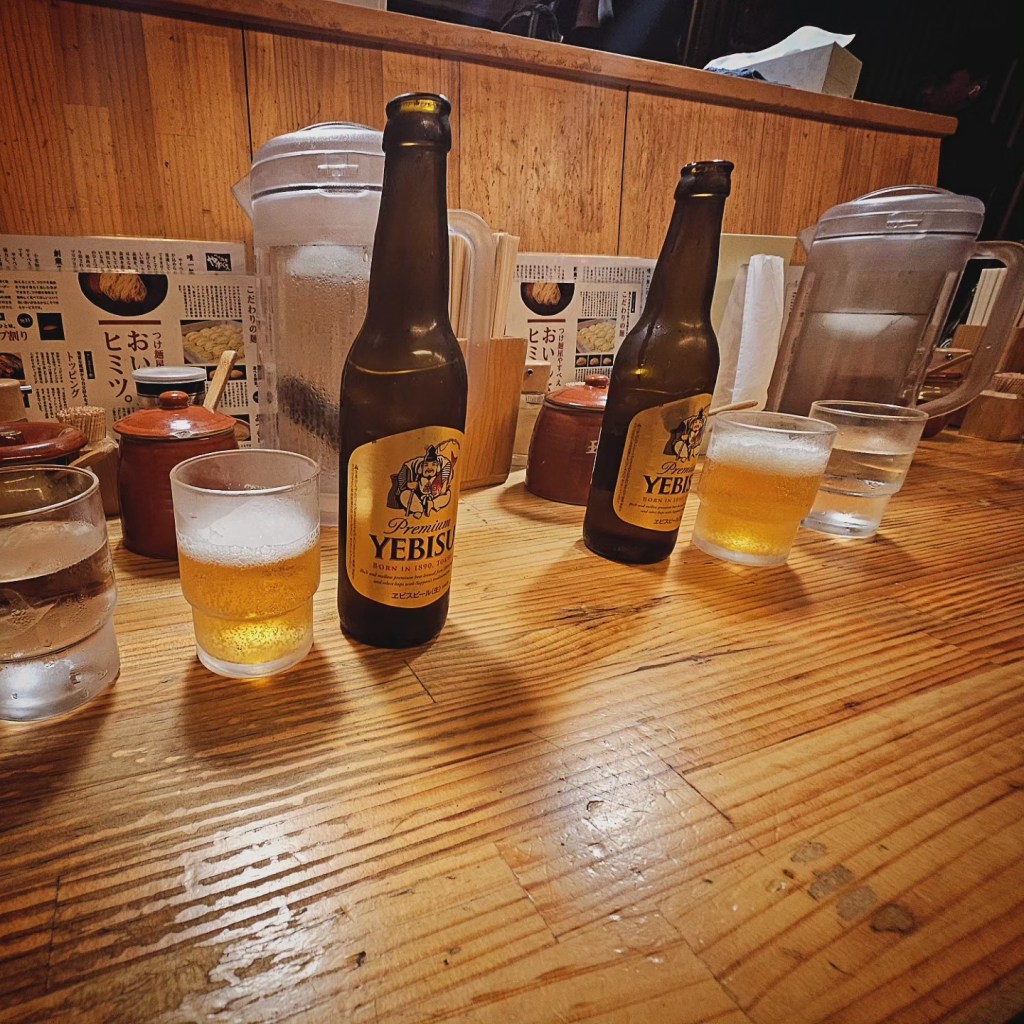
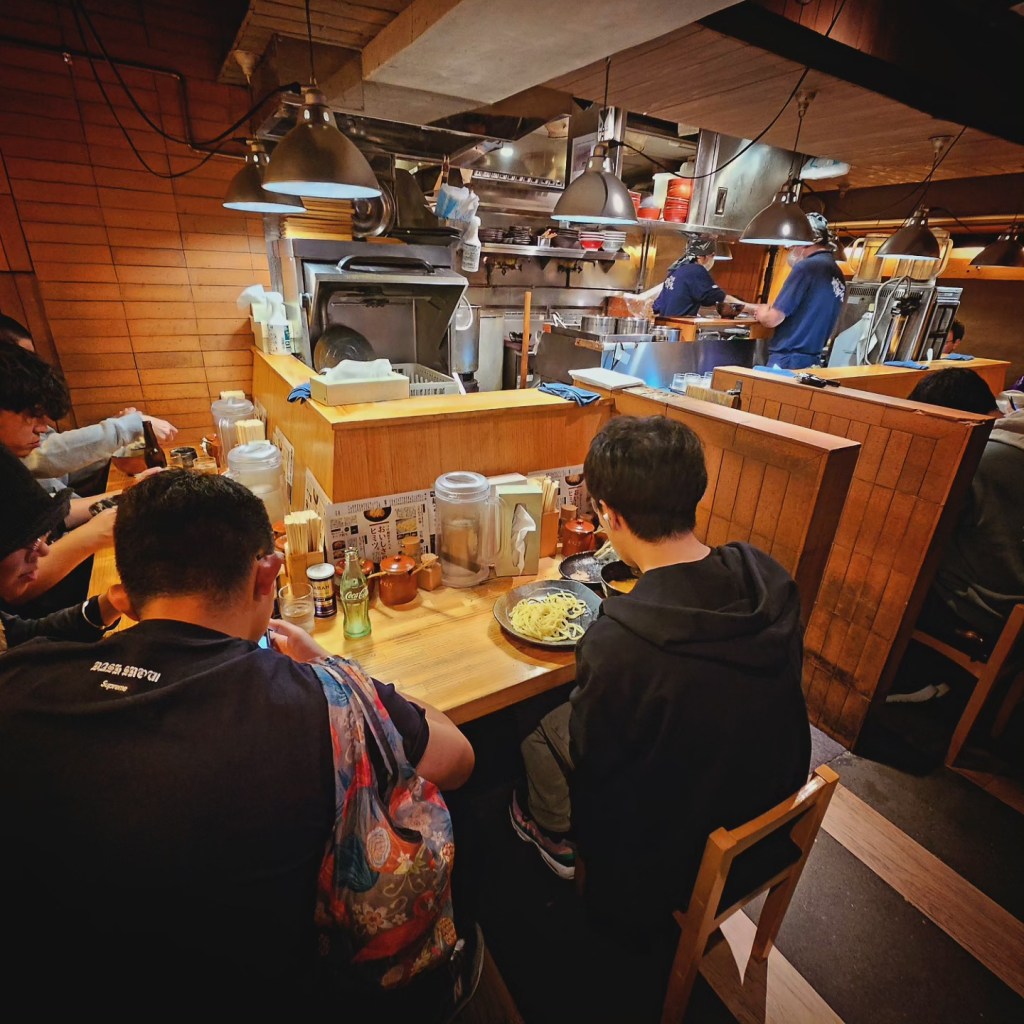
It was down one of these streets that we ate our first meal. We followed a gaggle of young and trendy looking people through a door and down some stairs. Here lies a little café of around ten seats, clustered around the kitchen. You wait in the queue on the stairs, and, when beckoned forward by the chef/waiter/proprietor, you order via a ticket machine that looks like it belongs in the Eighties. Entering 1,000-yen bills, you select what you want and, given that the buttons are in Japanese, hope that the restaurant has an English menu, or that a friendly soul behind you in the queue can guide you. This place had the latter. The young’uns helped us order a bowl of ramen for me, tsukemen for The European, and a couple of beers. The food came to around 1,500 yen apiece, with 500 each for beer.
I’ll regard tsukemen as deconstructed ramen but that’s trivialising this great dish. After the success of this first night, we ordered it a few more times and got to know the tricks and intricacies for making the most out of eating it. Tsukemen, like ramen, doesn’t always come with egg, so we became accustomed to ordering one. As is typical of tsukemen, the broth is much stronger than what comes with ramen, so it’s normal to ask for hot water to dilute it at the end of the meal, where you can drink it like soup.
With tsukemen, you’re presented with this bowl of strong, flavourful broth and a separate bowl of noodles, served hot or cold. The noodles are added by you to the broth, to immerse and marinate, or to swiftly dunk and devour. Its simplicity is betrayed by the complexity of the broth, which we found to be universally incredible. We had a pork tsukemen in Osaka that was served in a heady fish broth that pushed the boundaries of what umami is capable of. Back in our basement dive in Akihabara, my ramen was excellent, but I preferred The European’s tsukemen. Served with fresh, plump noodles, the pork broth was salty, meaty, and left me begging for more.
We ended up having tsukemen once more before we left Tokyo, in Shibuya, accidentally visiting a different branch of the same restaurant – called Yasubee – that on our first night in town, gave us the best introduction to what food in Japan was going to offer us over the next two weeks.

 The food thing.
Leave a reply to Two Weeks of Eating in Japan, Chapter 4. Cancel reply