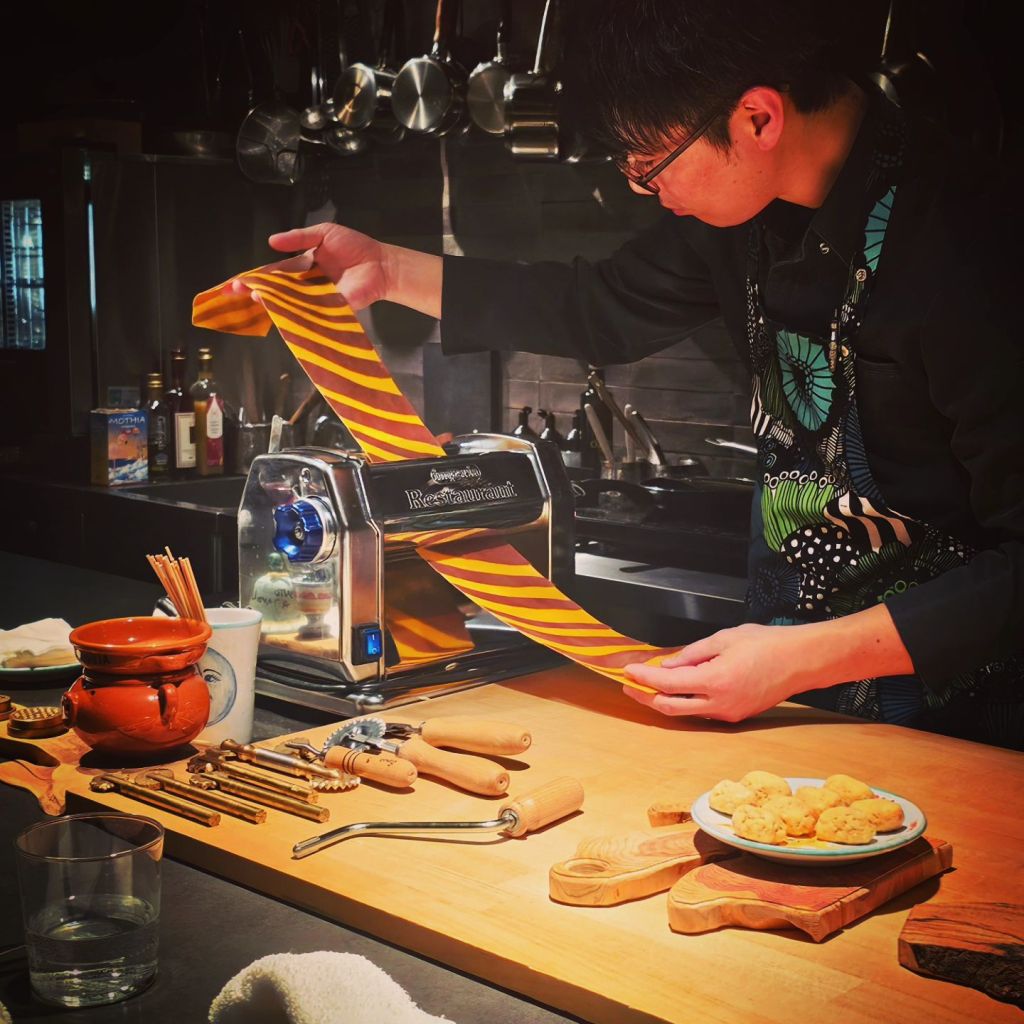
On the flight out to Japan for the third time in three years, I was reflecting on how much is too much when it comes to travelling to one country, especially when there are loads of other places we have to go on our hitlist, which get continually bumped because of the perpetual draw of shinkansen services, konbini, temples, and suchlike. The same can be said of pasta. Back in Woolwich, we can sit and eat bowl after bowl of the stuff, courtesy of The European and her knack for making the simplest bowl of macaroni taste divine. Here, again, how much is too much? When our tummies hurt? When we start to affect the tides?
Whatever the answer, we are emboldened by our capacity for dough, and so, one night, while brushing my teeth, when Instagram recommended me a pasta omakase restaurant to try in Tokyo, I thought a) my algorithm is a wonderful thing and b) it has to be booked this instant. I reserved a table while dribbling toothpaste over my phone screen.
Fileja was the restaurant’s name, and it’s located in Akihabara. Akihabara: our favouritest district of Tokyo. Pasta. Omakase. This is too perfect. I plugged it in for our final night of the trip, a culinary swansong similar to the role T Nakameguro fulfilled so brilliantly a year ago. The only cloud of doubt? The notion that Instagram often serves up howlers, such as Rack City Ribs at The Golden Lion a couple of years back. Nevertheless, Fileja looked amazing, and I figured that after two weeks of cheap eats in Japan (this holiday was on more of a shoestring budget than previous years), an indulgent multicourse tasting menu would be just what the doctor ordered.
Turns out we ate rather damn well all trip long. Even for lunch on the day of our Fileja dinner, we had visited Kamakura, and enjoyed the most incredible Wagyu don (a volcano shaped mound of wagyu beef coving rice, topped with an egg yolk). We were not even hungry, or yearning for fine food. Fileja was to be a cherry on top. Luckily, the trip back from Kanagawa, “the Kyoto of Eastern Japan” was long and undertaken during rush hour, and by the time we got back to our hotel in Akihabara, we were ready to eat once more.
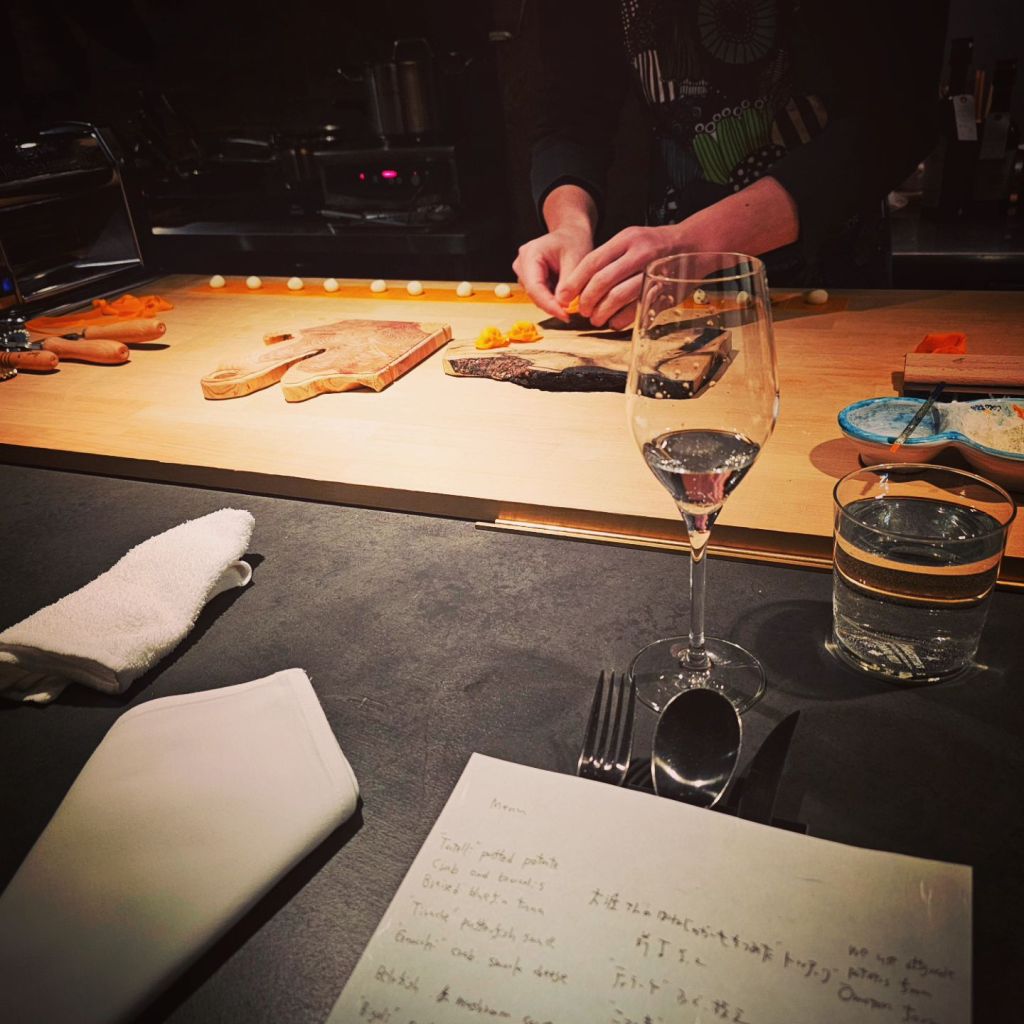
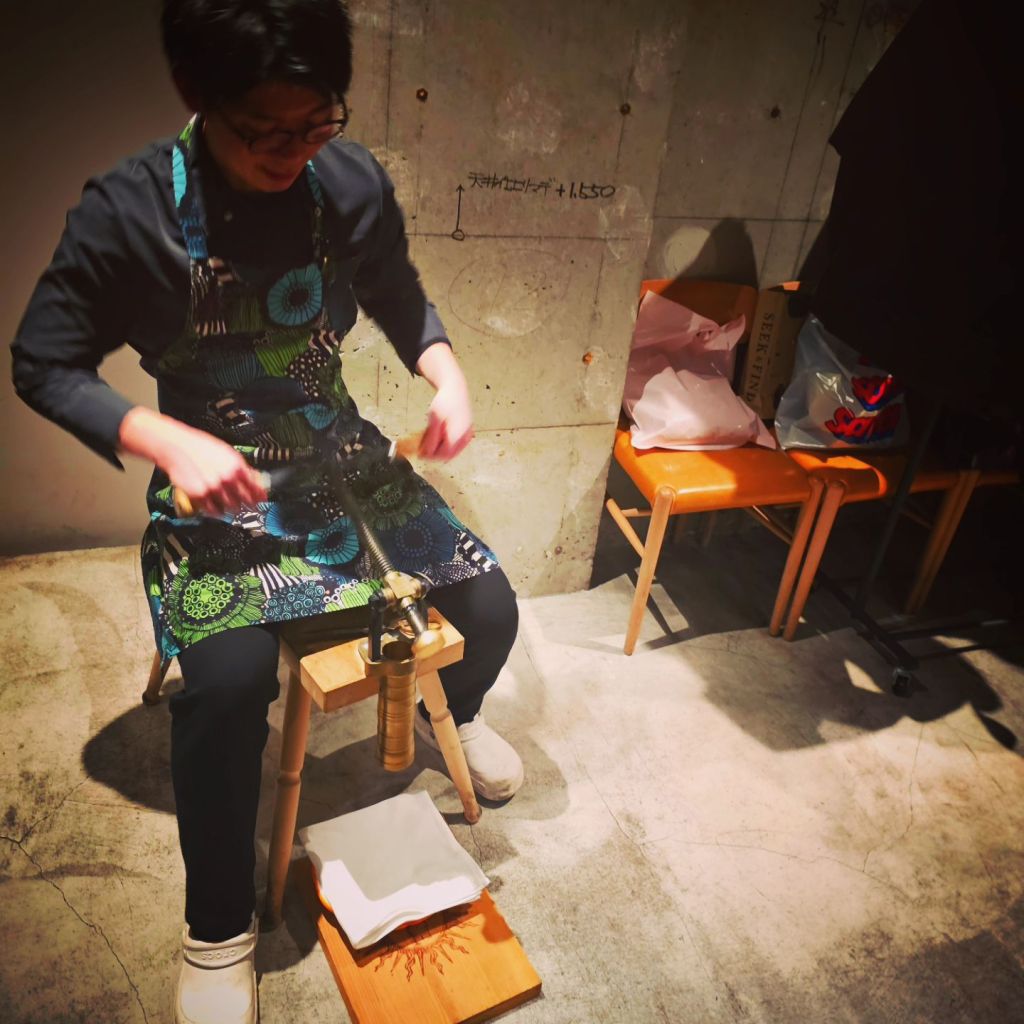
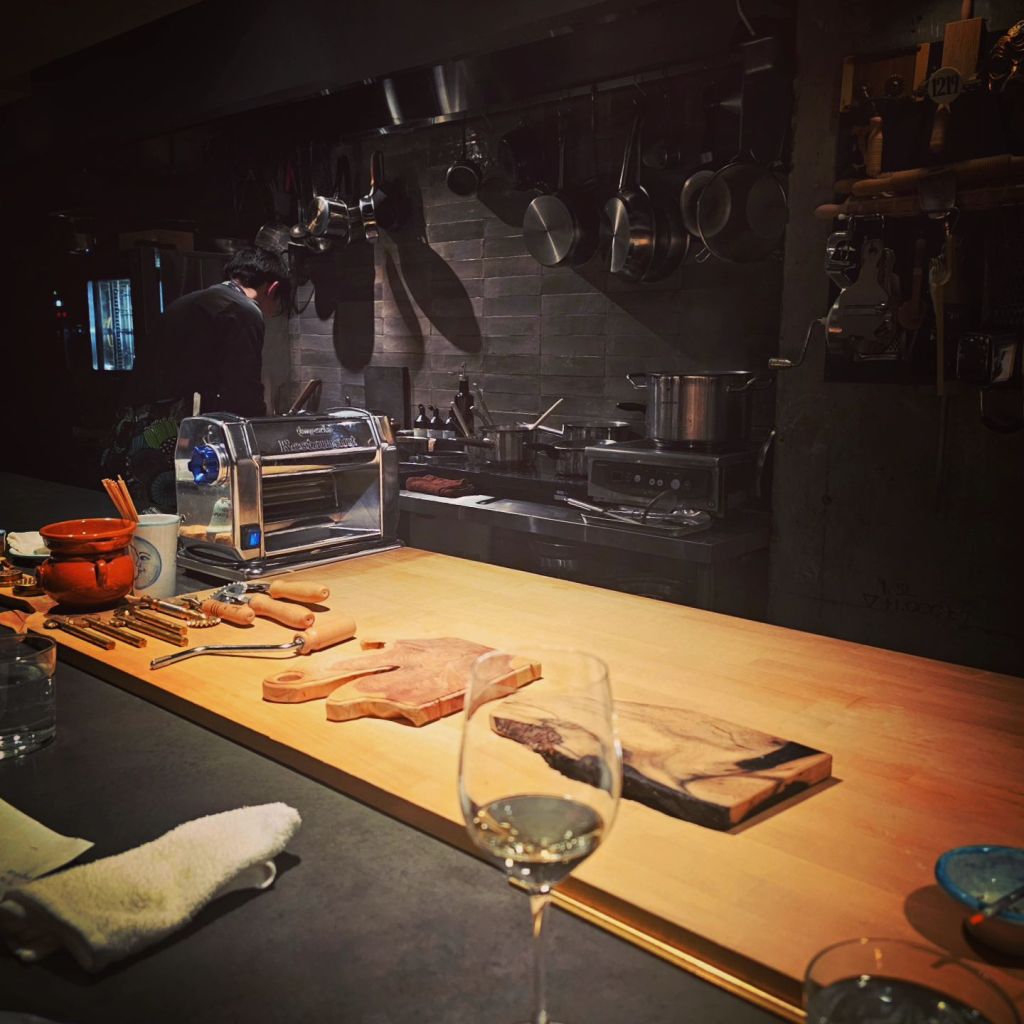
Fileja is located, like many restaurants in Tokyo are, within an inauspicious tower block. We found the building with relative ease. A sign, typed onto A4 paper and stuck outside the door, told us that the shutter on the front of the restaurant is broken, and that we are to head in and take the first door on the right. Inside, we were warmly greeted by the Chef Patron Katsukazu Saneyama in his funky Marimekko apron – the only member of staff working here – and as we shuffled off our jackets, checked out our surroundings. In front of us: the finest open kitchen you ever did see, bathed under spotlights, accenting the dark granite and minimal décor.
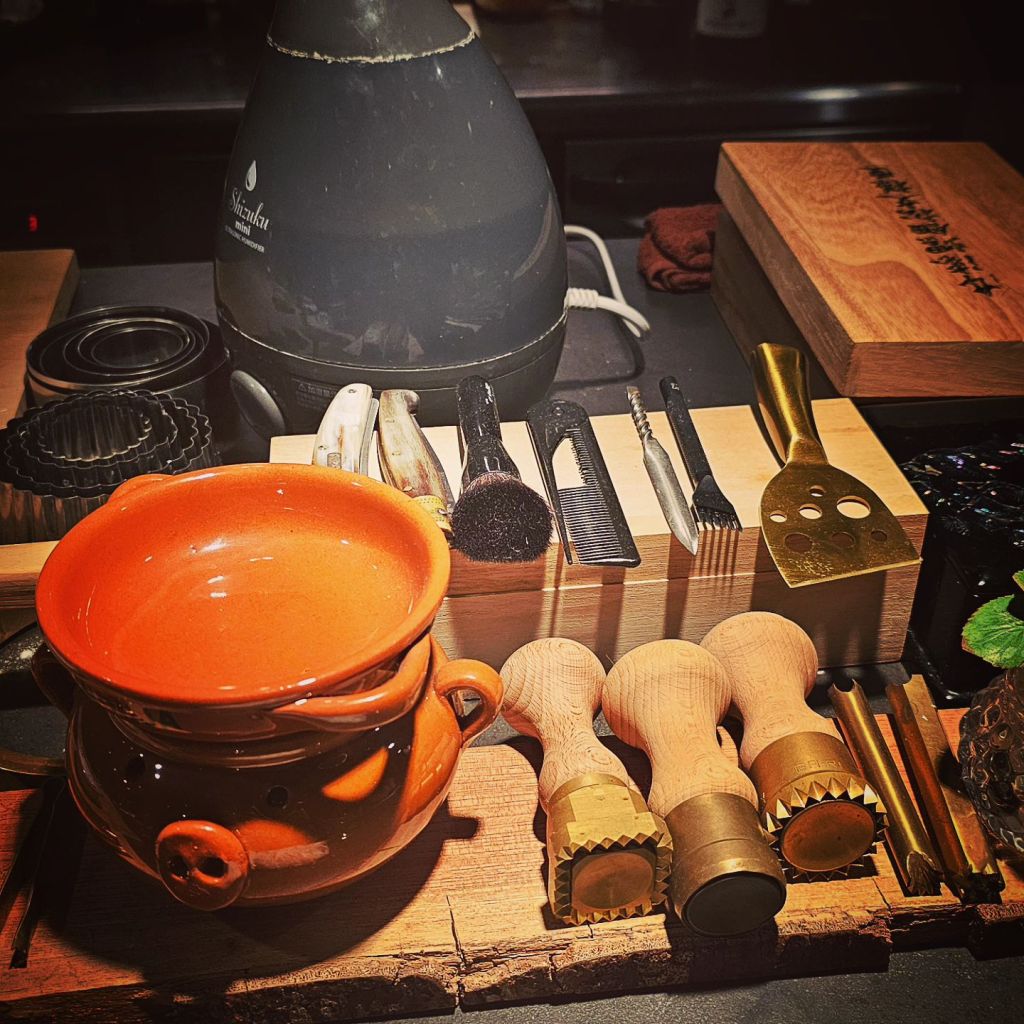
Dotted around the sparseness are nods to Italy, such has a rack on the wall where Saneyama has hung pasta cutters, rolling pins, cheese graters, and a Colombina Venetian carnival mask. The plates are stacked, ready to go, and are fine examples of maiolica, many adorned with the name of the restaurant. At the back, in stark contrast to the fine surroundings, there’s a portable stove that does the heavy lifting; on one ring, a pot of water permanently on rolling boil, and the other reserved for various pans used throughout the evening. To our right, there’s the broken shutter, that disguises Fileja, consciously or unconsciously, from the outside world. On our left, there’s a wooden press-like device with a stool attached to it that looks like a garotte used in the Inquisition. Besides this, there’s a cheap coat rack that you might buy from Ikea for twenty quid.
This juxtaposition of cheap/temporary/broken vs. service/style/torture devices carries the evening along and made for one of the oddest culinary experiences of my life. Wine pairing exists, but not as I have ever known it before. You are asked to select any number of glasses “up to fifteen” and the price will come to “around two thousand Yen (£ten) per glass”. It’s a vague and scary approach, and so we went for five glasses, but received (and paid for) six.
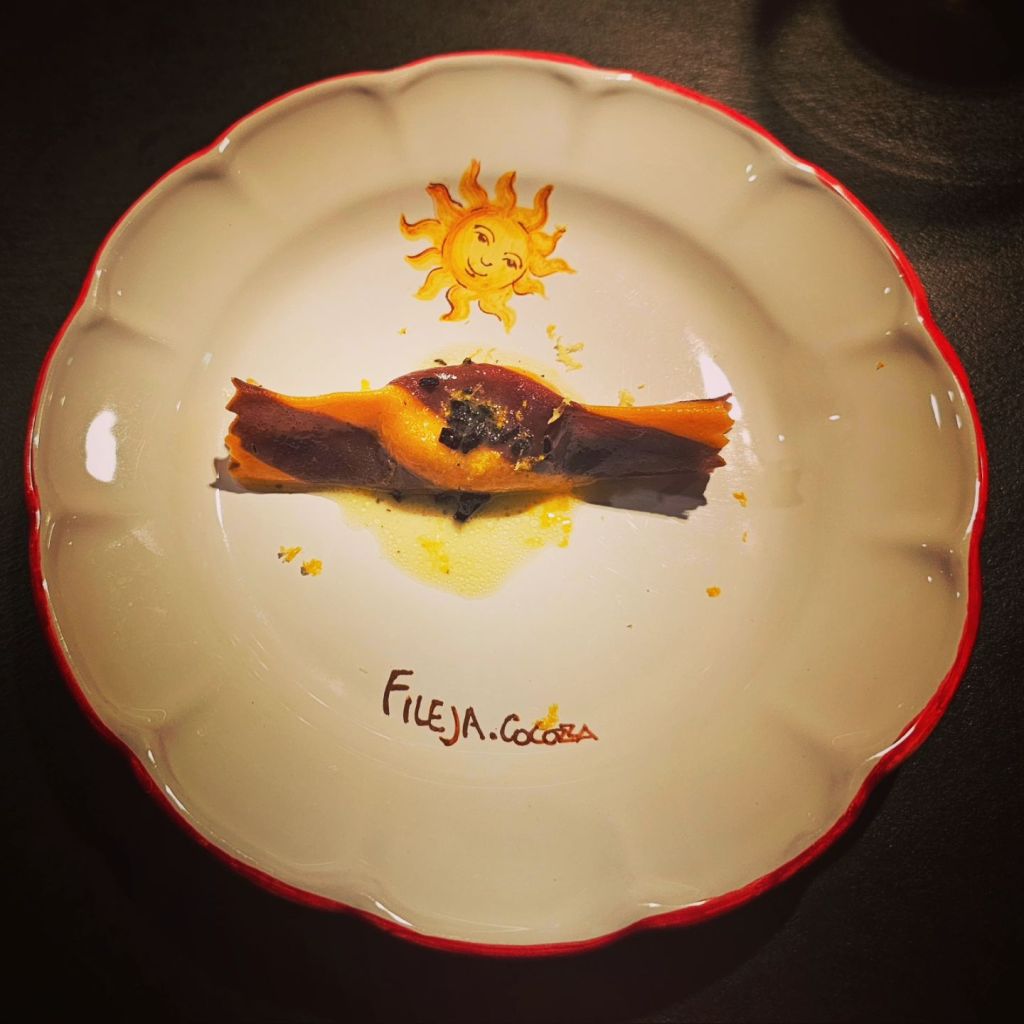
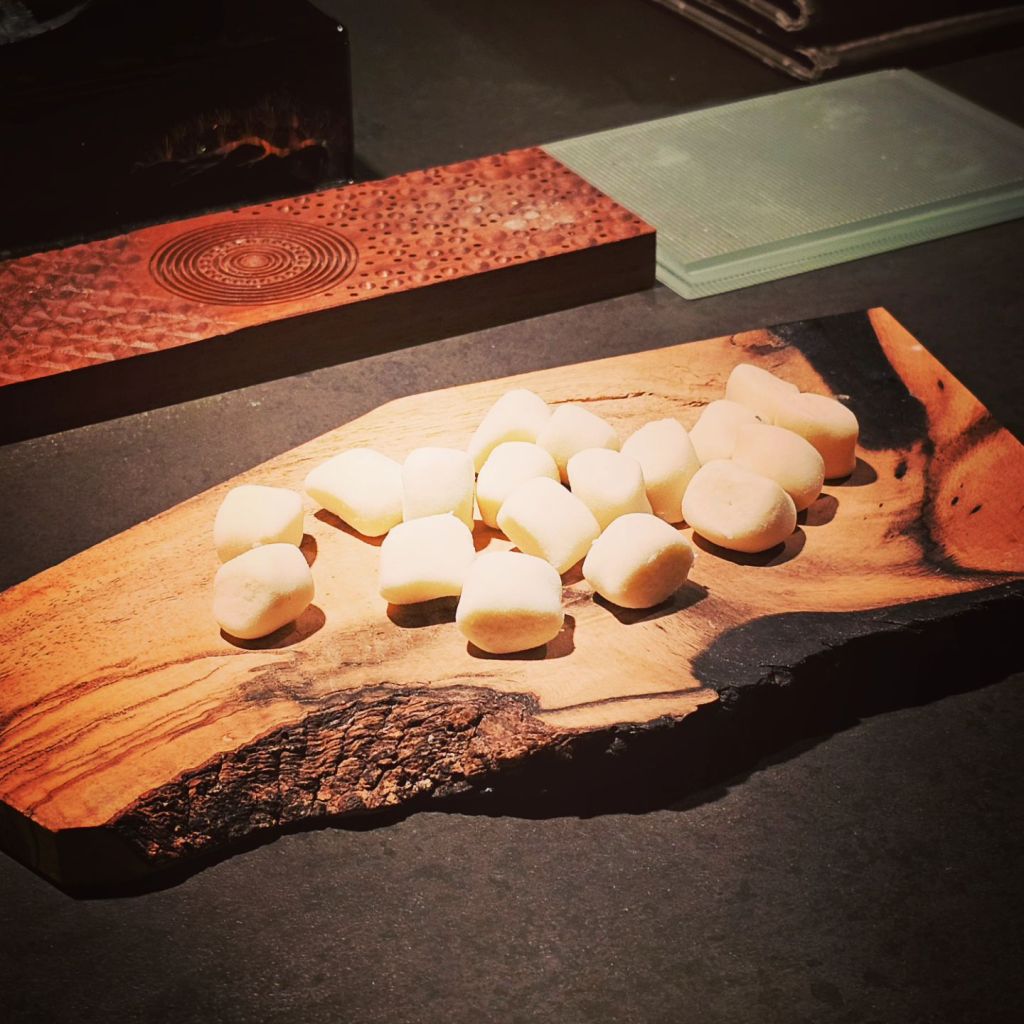
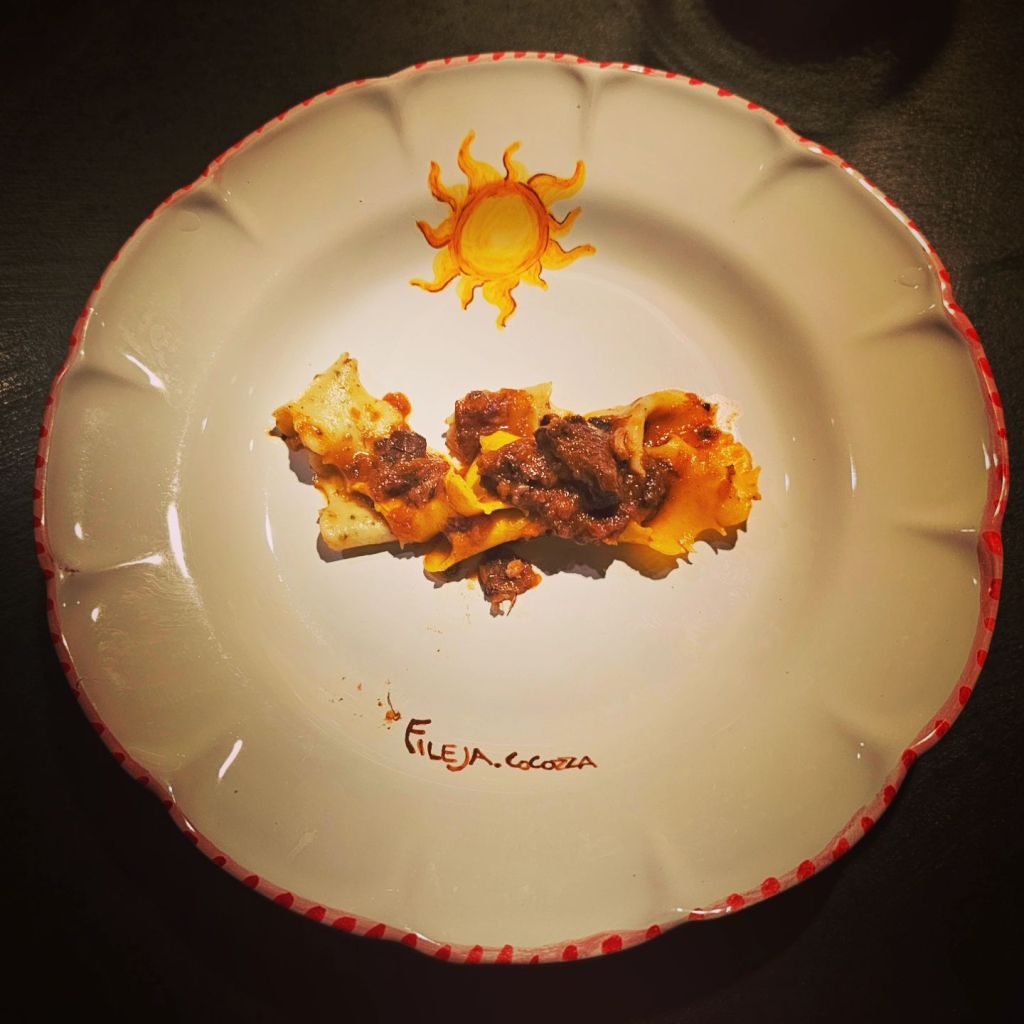
The thirteen-course menu is roughly half pasta, half other things, offering varying levels of success. I can’t say this was the finest tasting menu I have ever tried, but it was special in its own kooky way. With one exception, every pasta course is handmade, hand-rolled in front of diners, and, in the case of the bigoli in a seafood sauce, churned from a chunk of dough into thick noodles by the infernal garotte. We gathered around to watch Saneyama use it, in the doorway, by the Ikea coat rack. Gnocchi was hand rolled and served with a rich crab sauce. I was mesmerised with the work that went into the “Pasta Caramella”, a striped parcel of wonder stuffed with a foie gras mousse. Another dish made with two doughs, what was baroquely called “Aslisanzas” on the menu, was served with an incredible venison ragu.
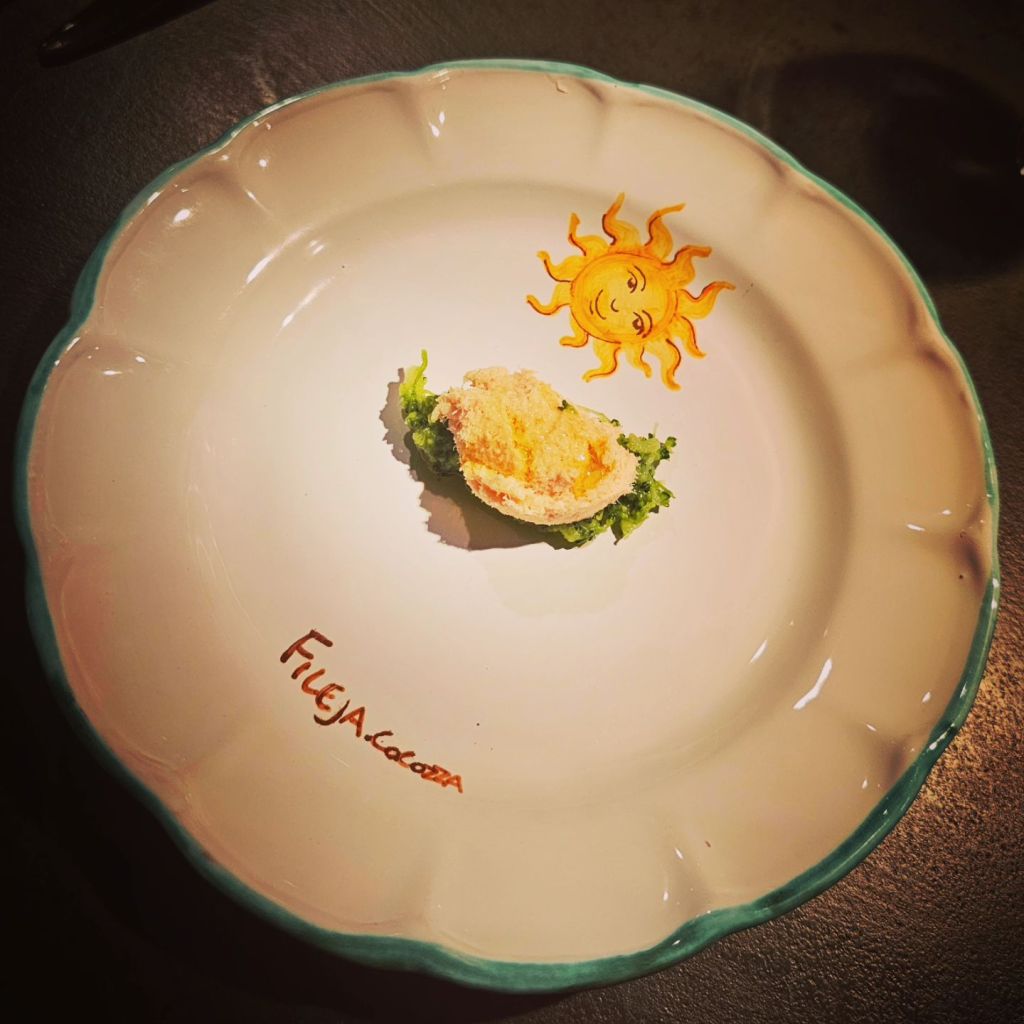
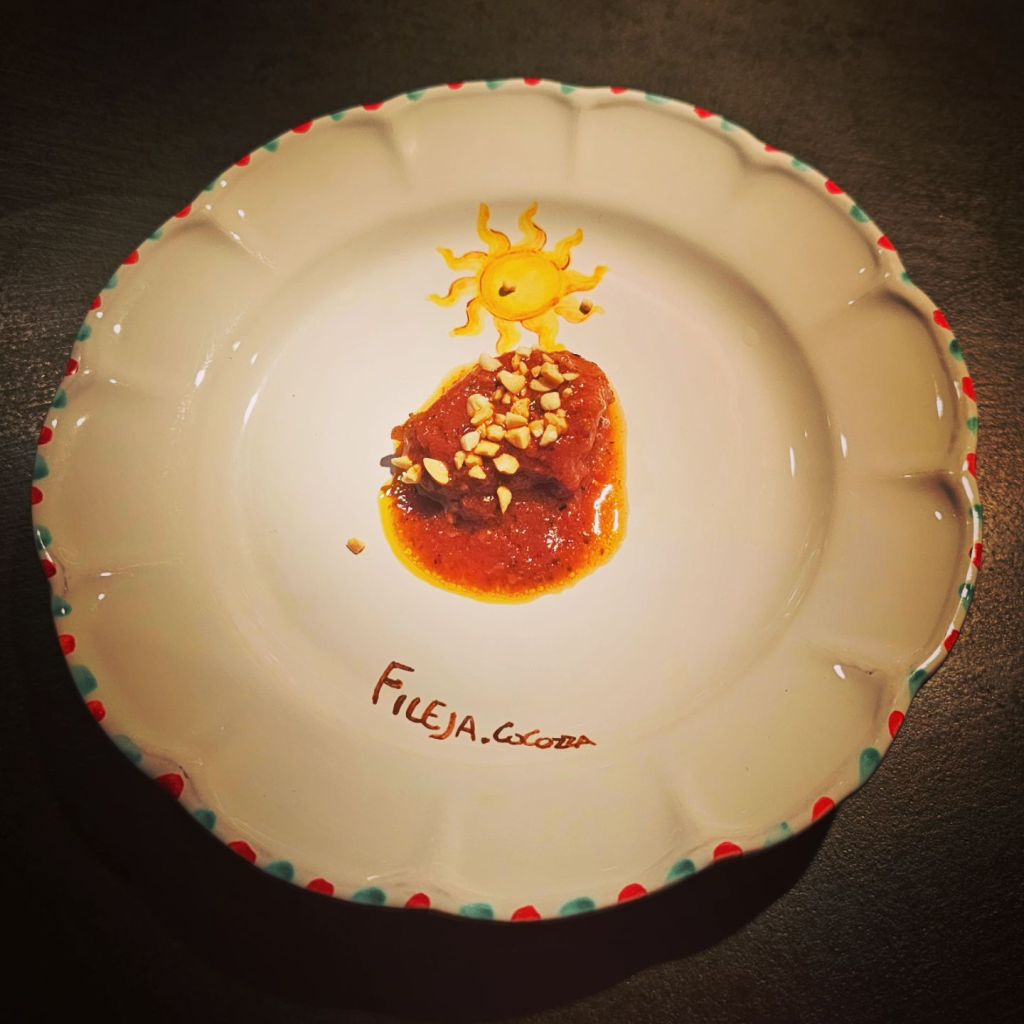
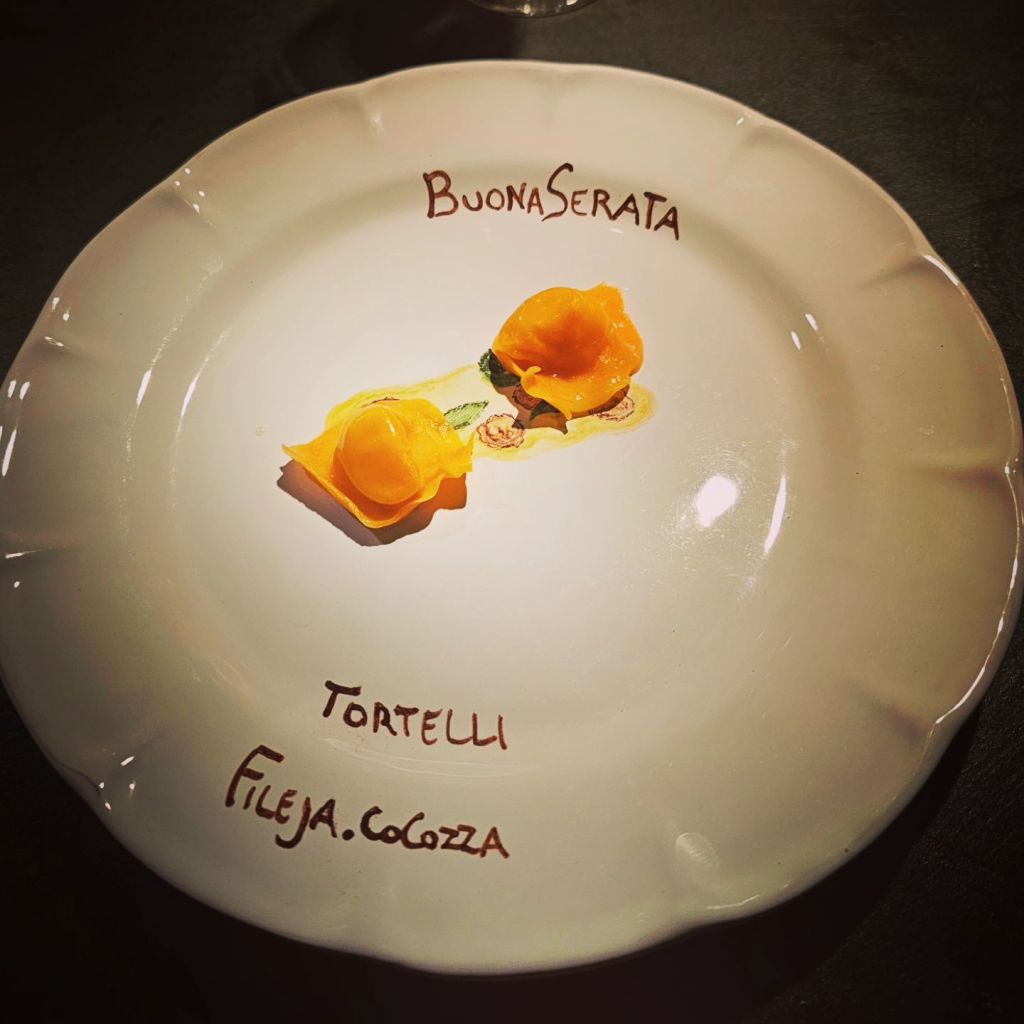
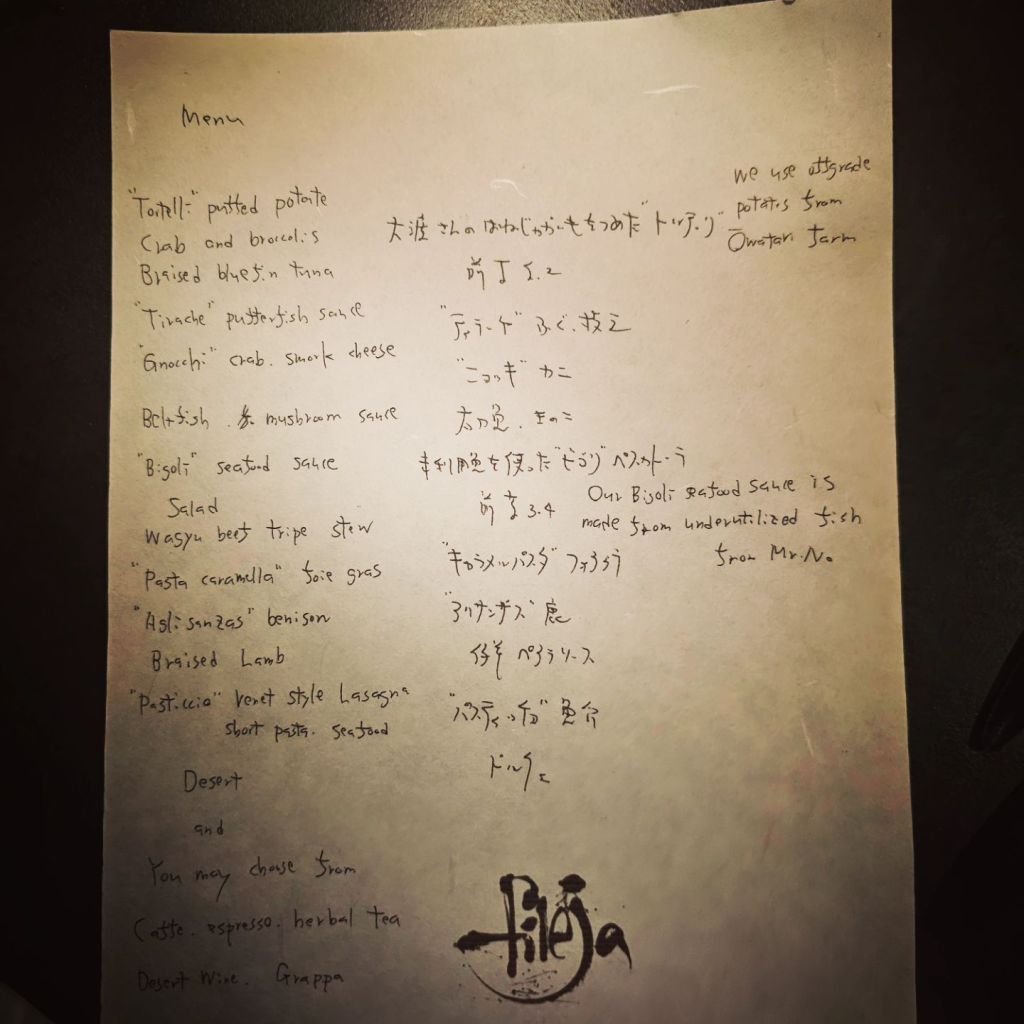
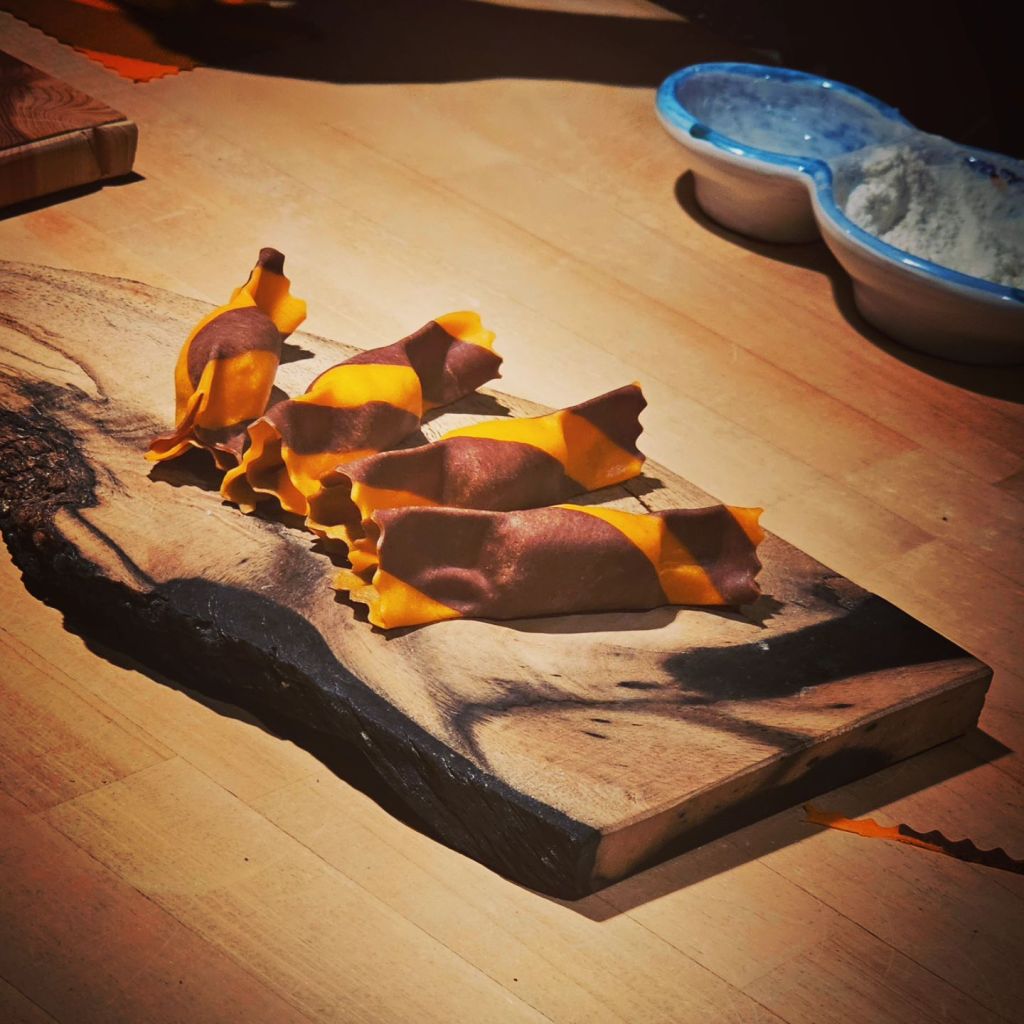
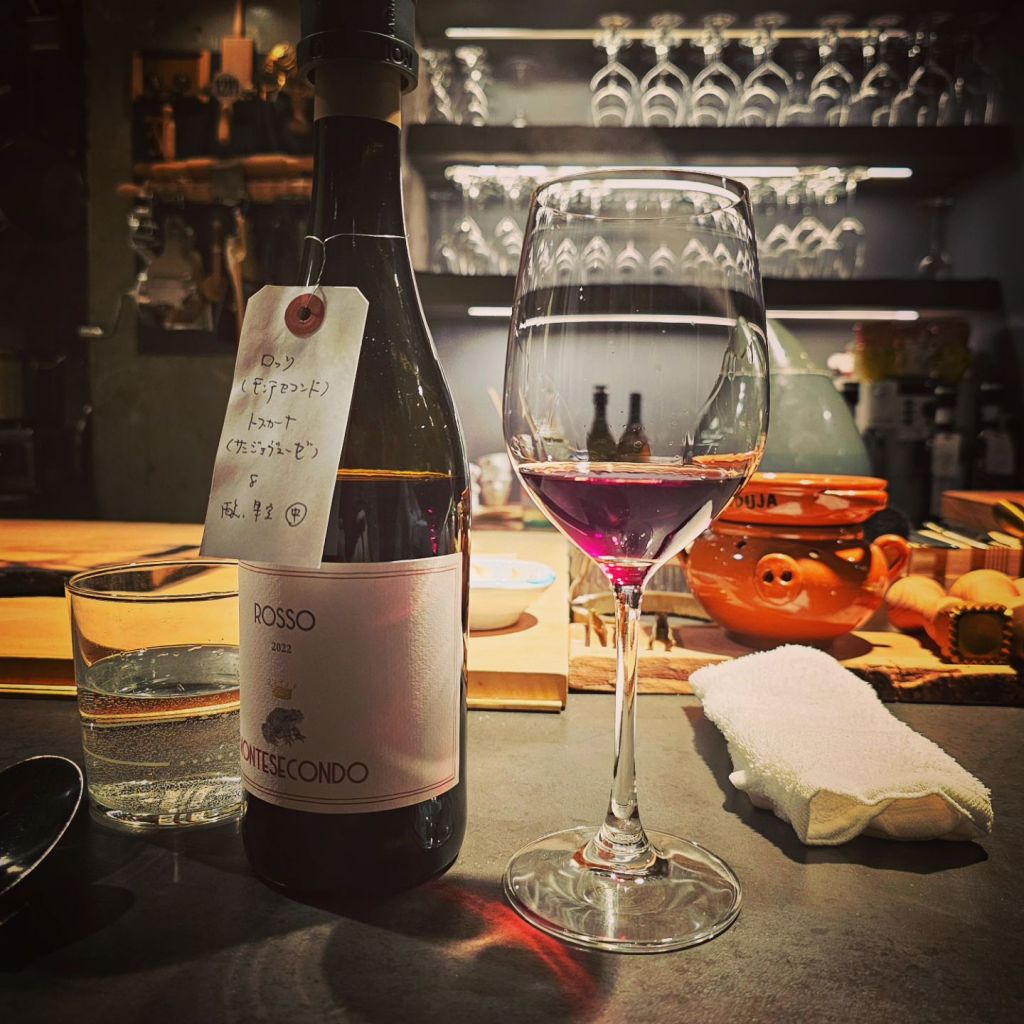
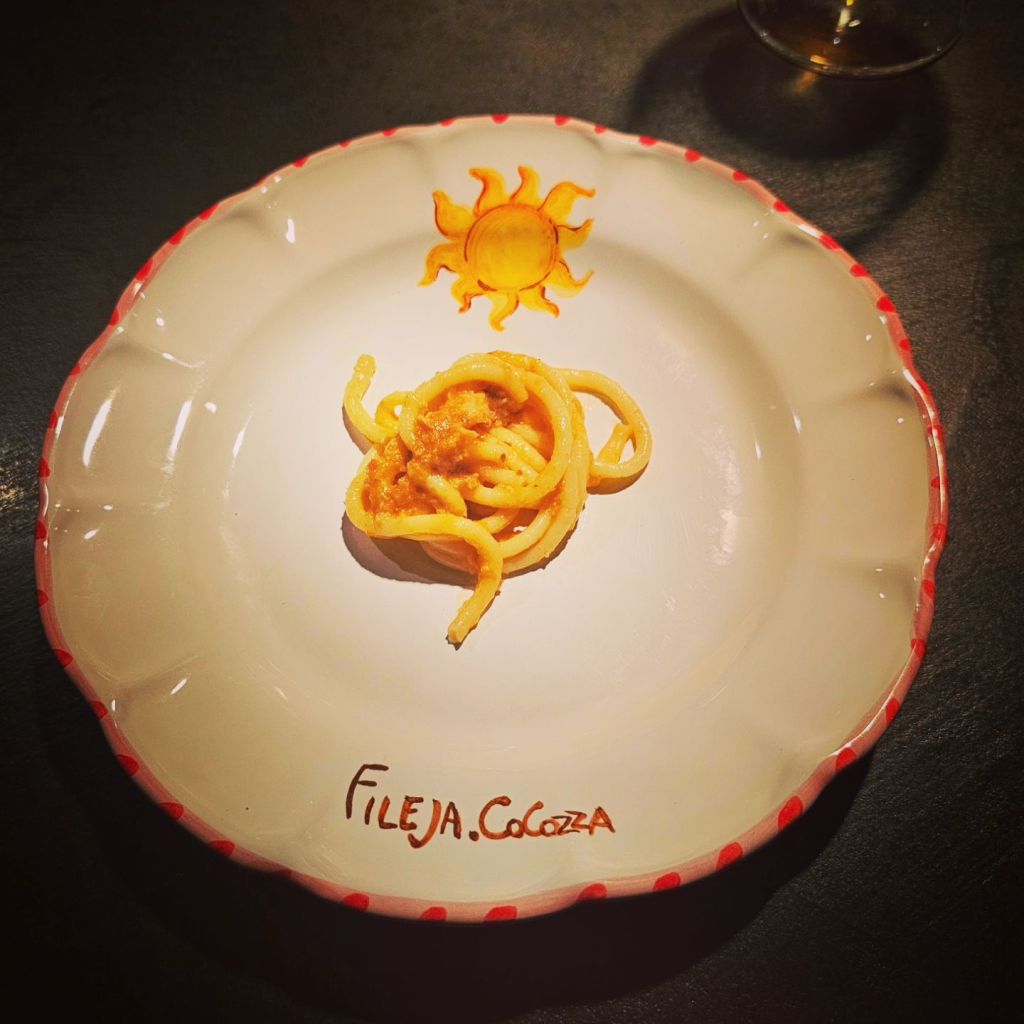
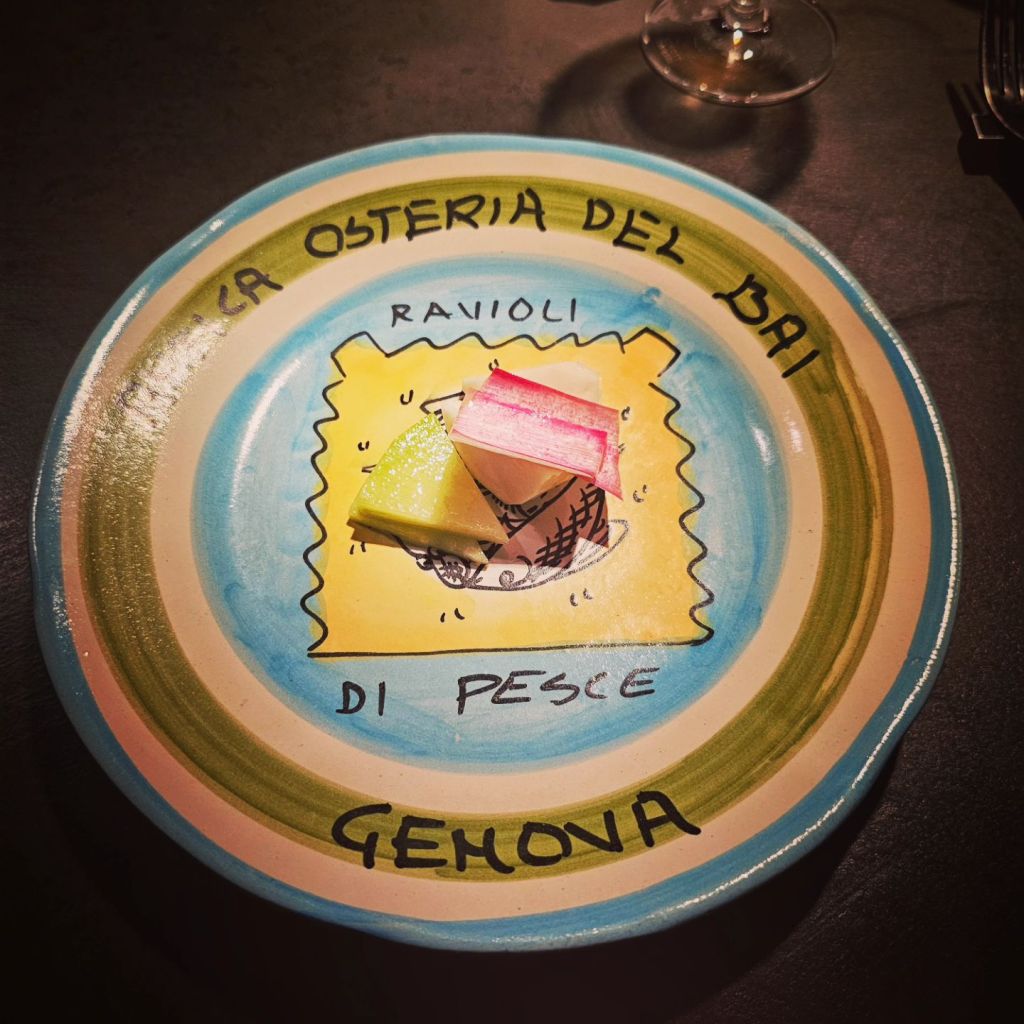
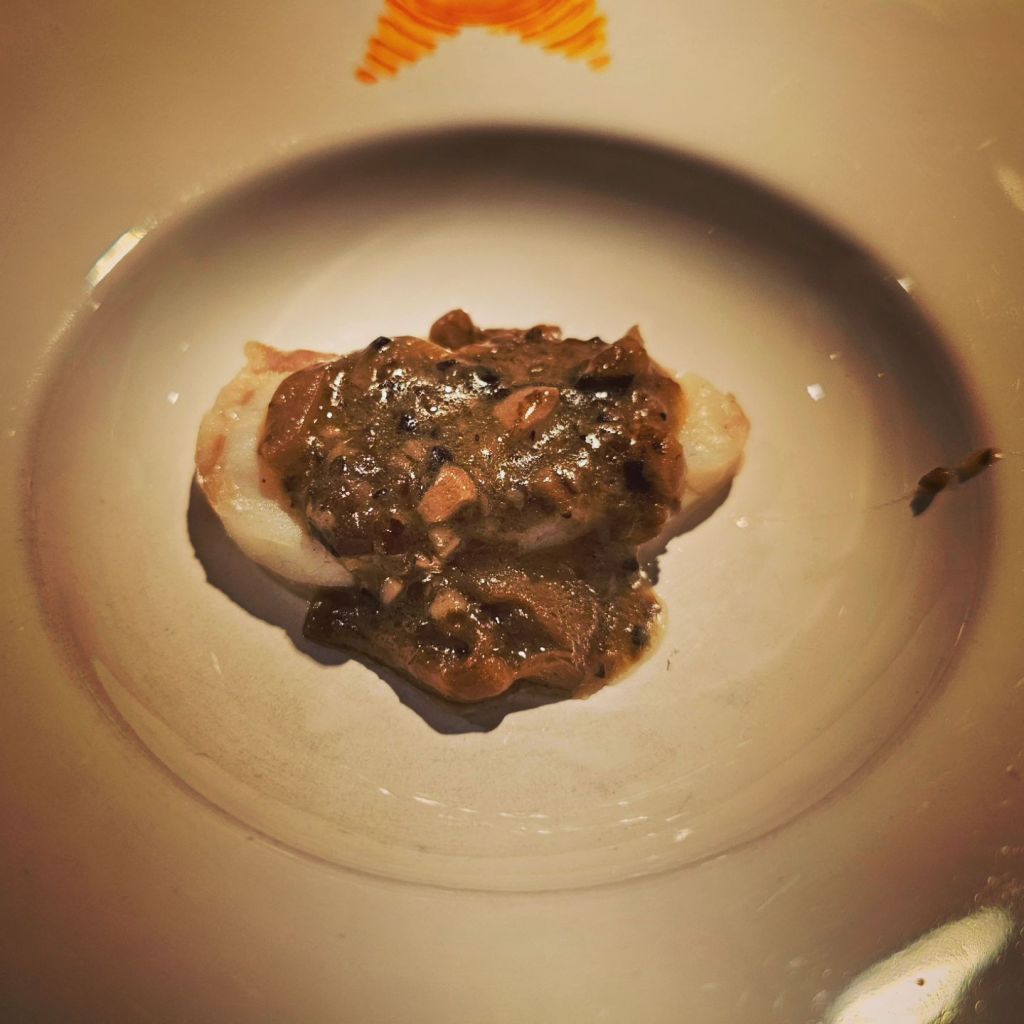
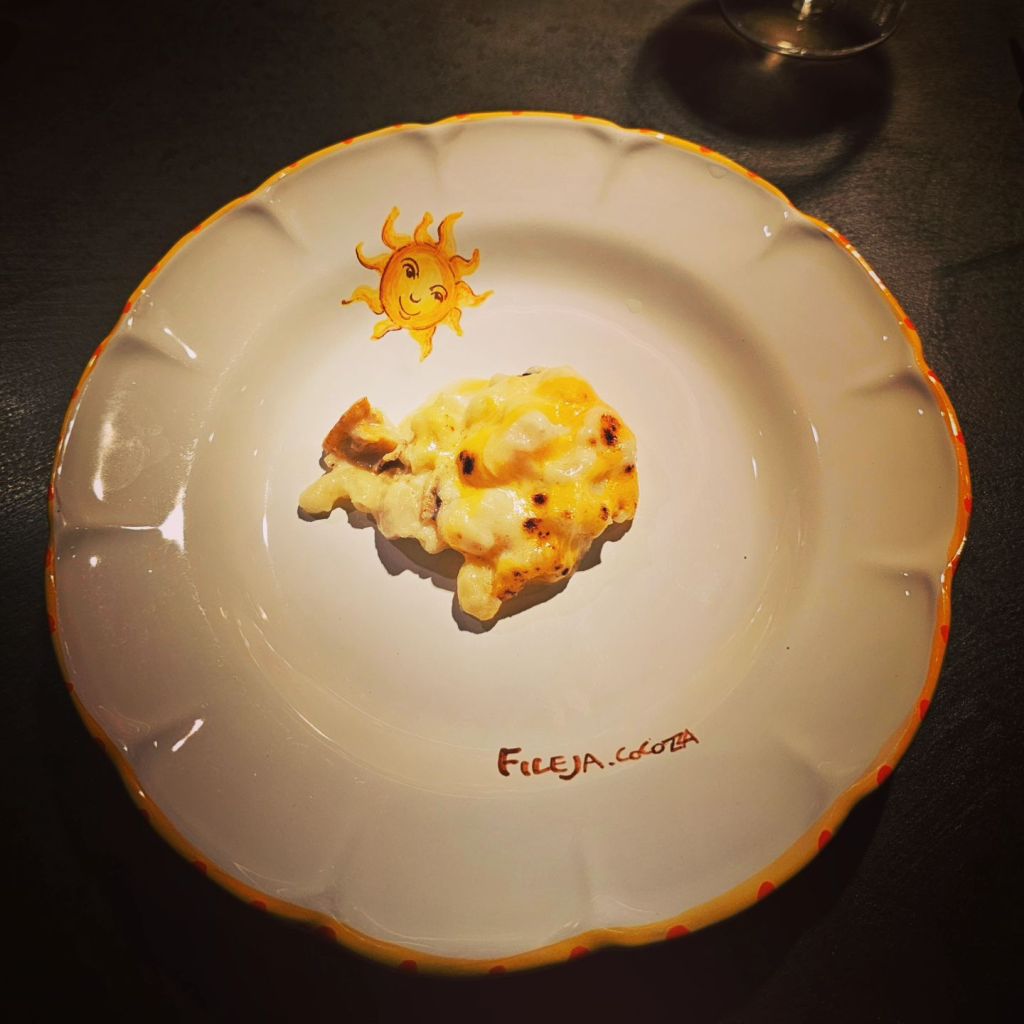
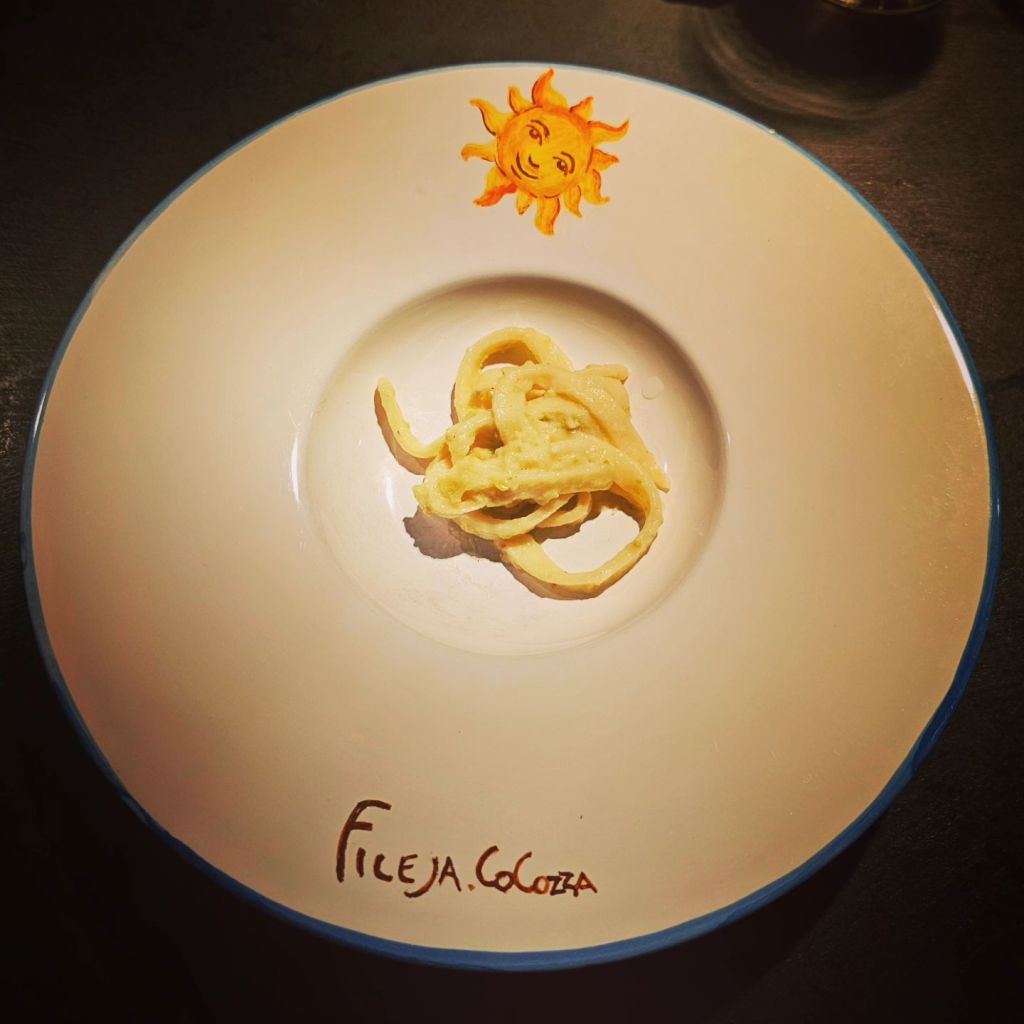
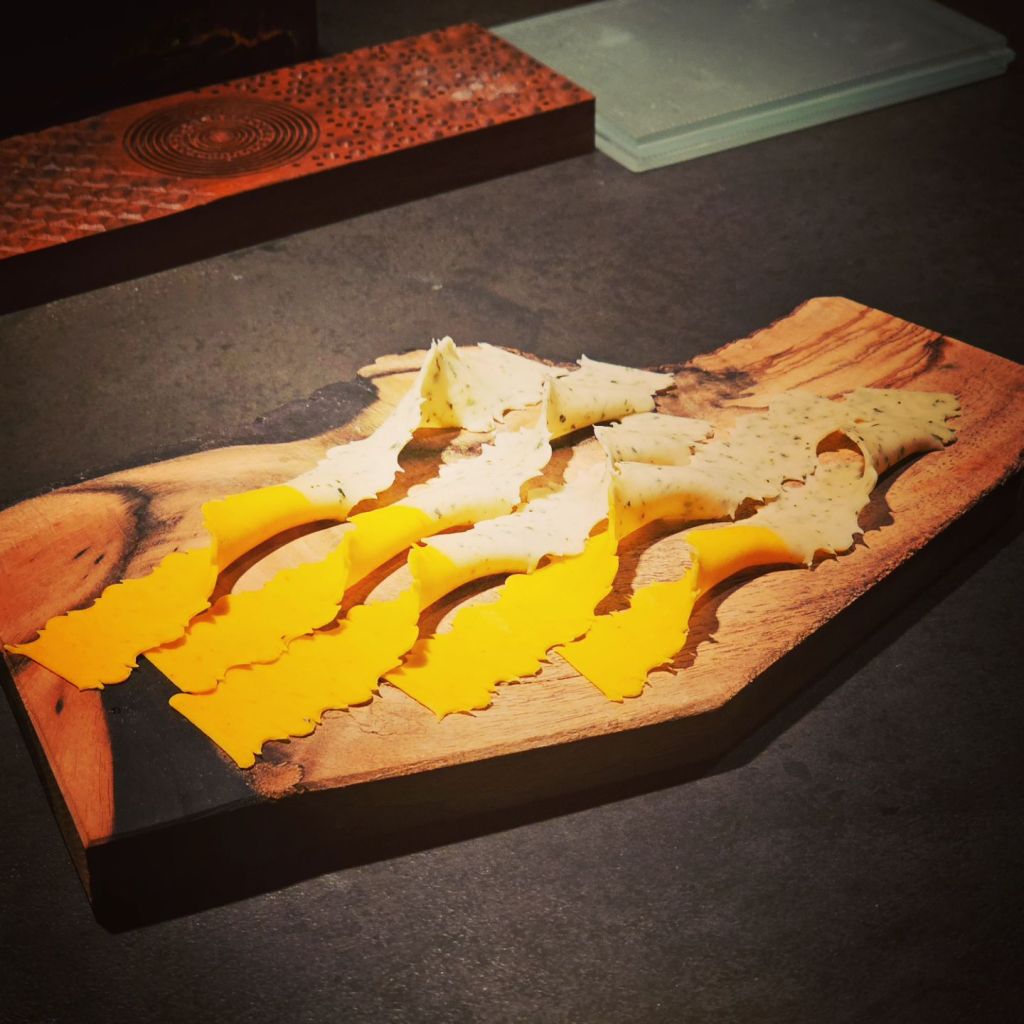
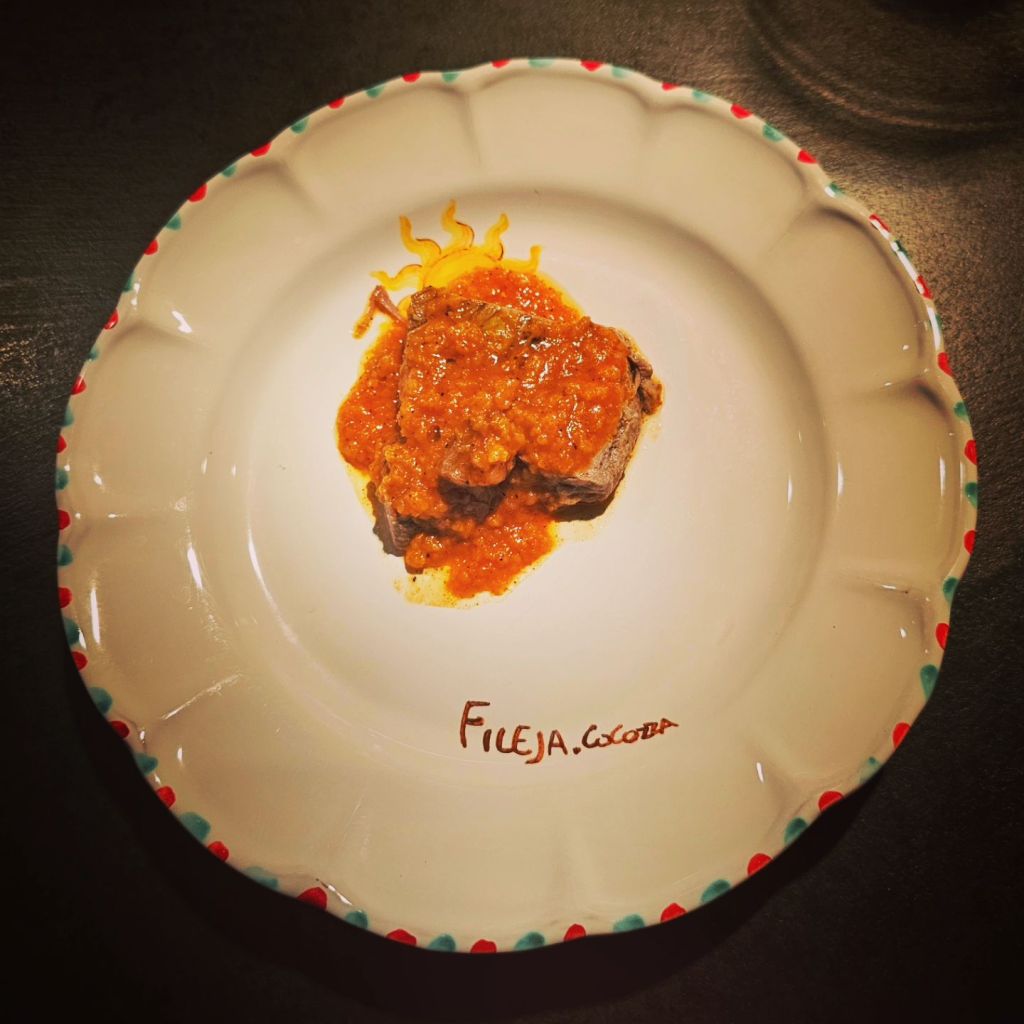
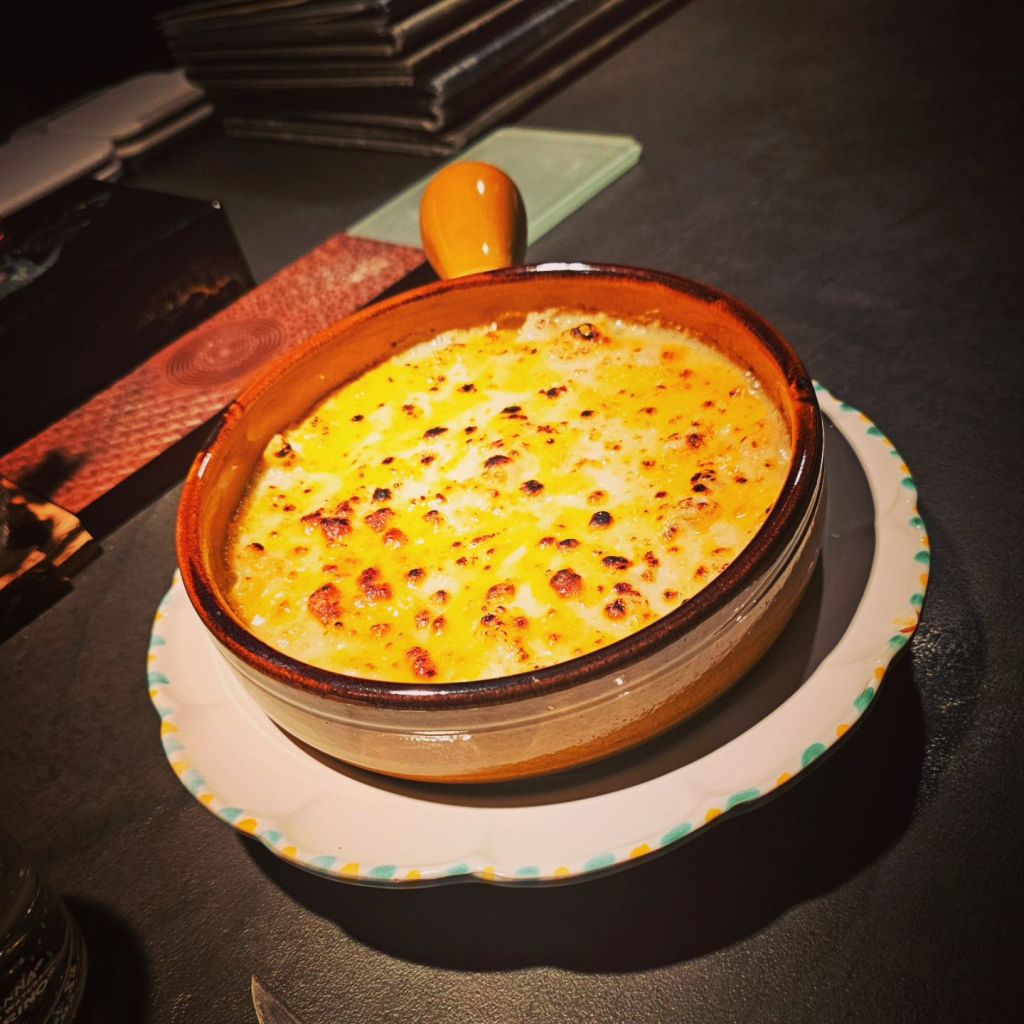
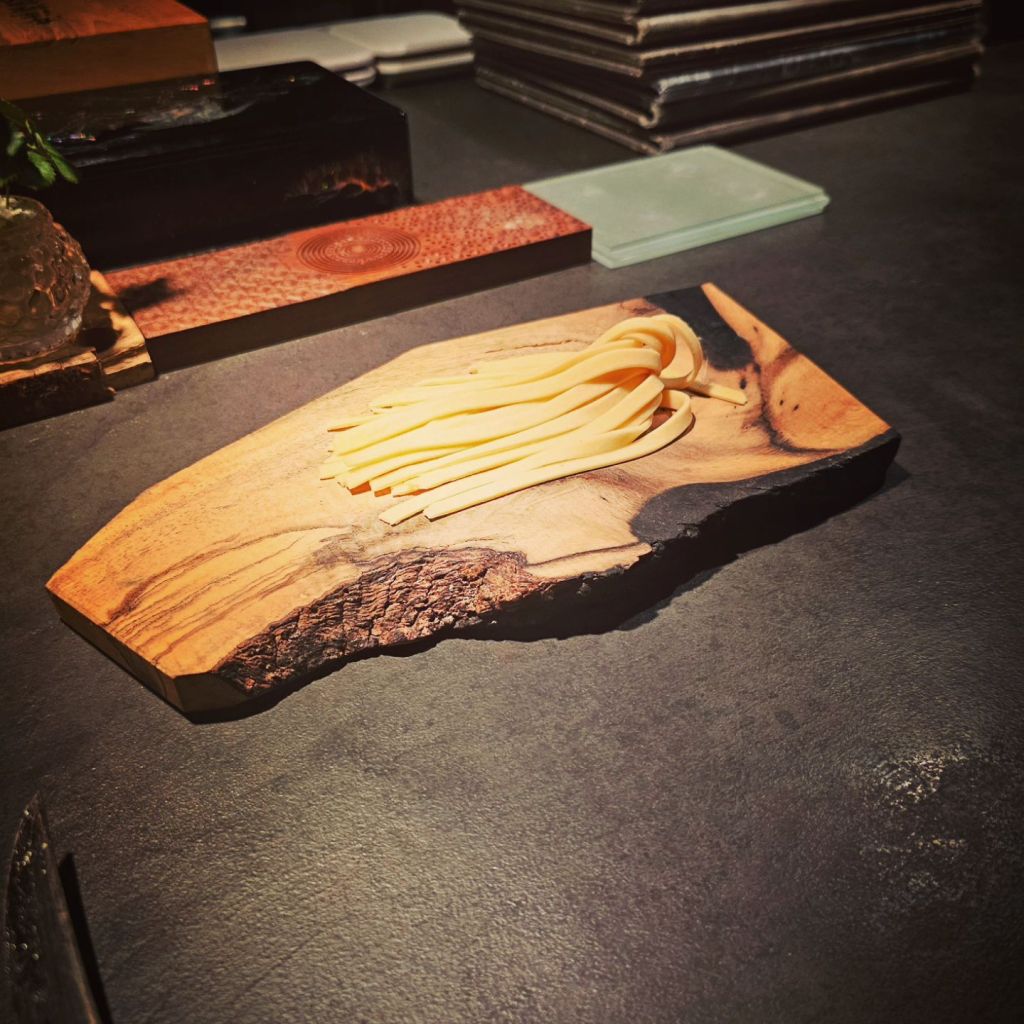
Nevertheless, the menu was flecked with dishes that should never be part of this party. The final course, “Pasticcia”, was described as a lasagna. It was a watery mac ‘n’ cheese (made with dried macaroni), served with prawns. Baked in an oven dish, it was presented proudly and ladled out to each of the eight diners. It was a terrible way to end the meal. Wagy beef tripe stew was bold but, at the end of the day, a tripe stew. The second course, braised bluefin tina in a tomato sauce, was overcooked. The next course was a spaghetti in a pufferfish sauce. I built this up in my head to be an exciting first foray into fugu, but whereas it was great that I came away from the evening very much alive, the dish was very bland.
Truth be told, there were many moments throughout this meal where the food on offer was almost childlike. It was all served by the thimbleful and I awoke in the middle of the night ravenous. I think a big part of the challenge is that a) we’re unashamed pasta snobs in b) a country whose citizens’ love of pasta borders on the fanatical, but, made to eat The European’s incredible tomato sauce, (passed down from her father who by all accounts scolded her savagely when it didn’t reach the giddy heights of what he could create), their heads might explode, in much the same manner that would befall a Victorian child forced to eat a Tangy Cheese Dorito.
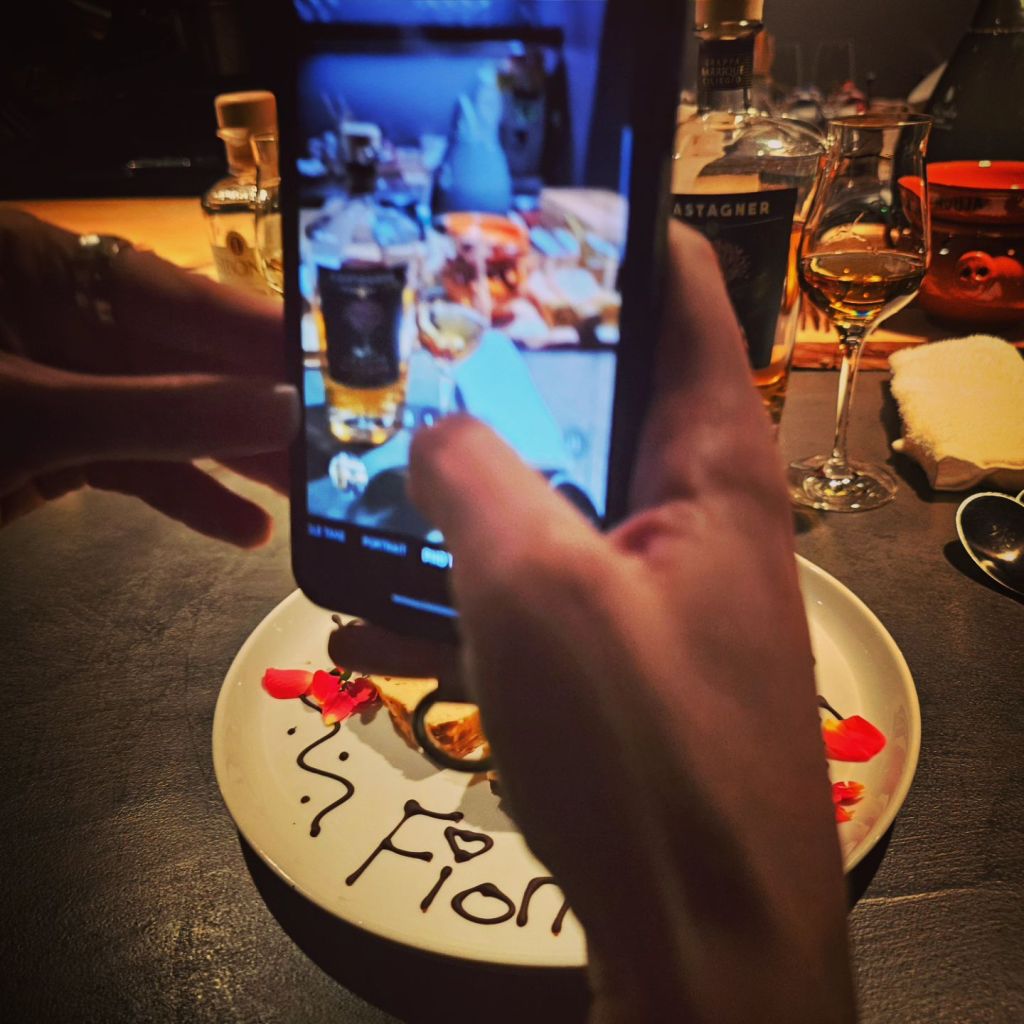
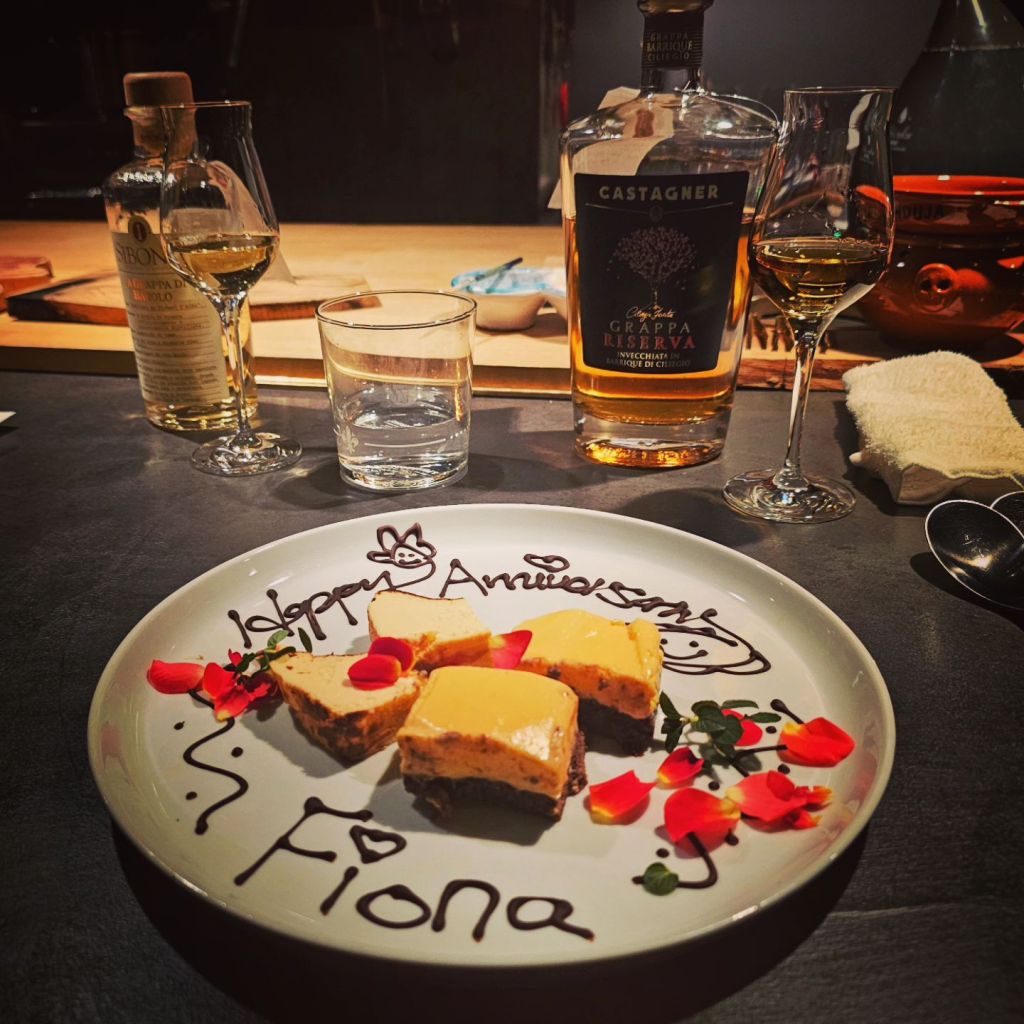
Nevertheless, the evening was riotously fun, original and we were expertly looked after. Saneyama is a wonderful host. He’s been running Fileja for four years and clearly has some backers who deeply believe in what he does. As a one man show, he’s a machine; I have never seen a chef so productive. Despite kicking out over ten courses of food and making most of his pasta from scratch, each dish rolled out perfectly on time. Little moments of care stood out. We enjoyed a wonderful anniversary dessert with a message in chocolate. The European received a rose, bought from a market far across the other side of town. This is Tokyo. Across town means a three hour round trip. Here’s a chef who is running a tasting menu every day, conducting his own menu engineering, prepping and cleaning down, twice a day for lunch and dinner, while going out and getting roses for his guests. I could have cried.
I probably did cry when he introduced the final course. A choice of tea, coffee, or grappa. A suitably ludicrous mix. Whereas Fileja was no T Nakameguro, we danced back to our hotel giddy on a tasting of two grappas (what ese would we have chosen?) and fond memories of a barmy night of wonder that you simply must experience to believe.
Thirteen course menu and six glass wine flight for two came to around ¥forty thousand (£one hundred and ninety).
 The food thing.
Leave a comment